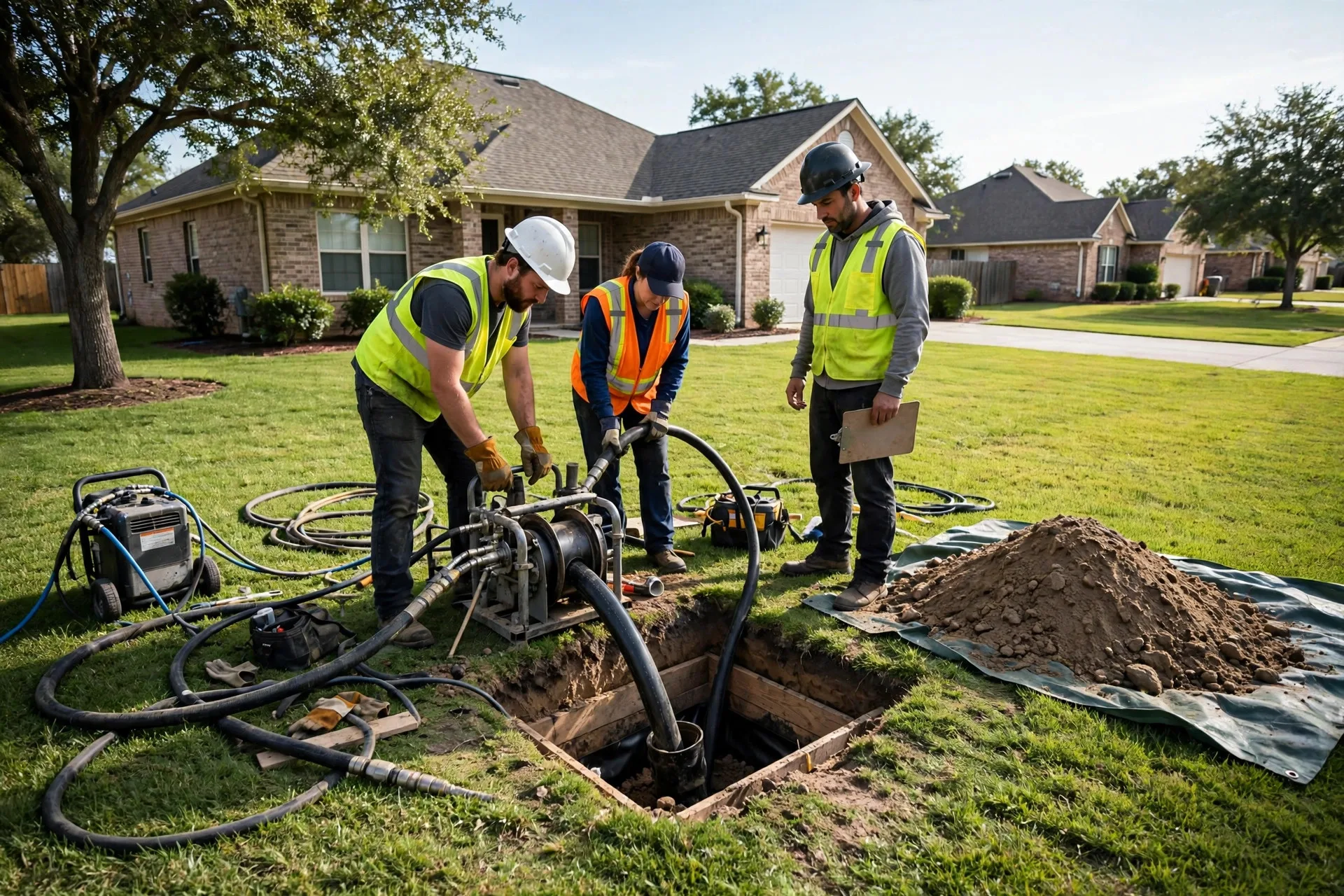
Sewer Line Repair in Rockwall, TX
Most sewer lines do not need full replacement. We find the failed section on camera, open only what must be opened, and repair that section properly.
Request Service
Tell us what is happening. We respond fast, and we show you the problem on camera before we quote the fix.
Sewer line repair in Rockwall, TX is the work of fixing the failed section of a sewer line, a cracked joint, an offset, a belly, or a root damaged run, without replacing the whole line. Repair makes sense when the camera shows that the failure is local, the rest of the pipe is sound, and fixing that section restores a line that can drain and stay sealed. It does not make sense when the line has failed along its length, and this page explains how a crew tells the difference, what repair involves step by step, and when the honest answer is a different fix.
What sewer line repair in Rockwall, TX means versus replacement, and why the distinction matters
At a glance
- Repair fixes one section and leaves sound pipe in place.
- Replacement removes the whole run and installs a new line.
- The camera shows whether the failure is a point or a pattern.
- A pattern failure repaired at one point fails again at the next joint.
Repair and replacement sound like two sizes of the same job, and treating them that way is how homeowners pay for the wrong one. Repair fixes a section. Replacement removes a run. The distinction matters because the cost, the yard disruption, and the lifespan of the result all follow from which one the line actually needs, and a crew that cannot explain the difference from camera footage is asking you to trust a recommendation you cannot verify.
A repair targets the failed point and leaves the sound pipe in place. The crew opens access at the failed section, removes the damaged pipe, sets new pipe on proper bedding, grades it so water flows, and seals the joints so roots and groundwater cannot enter. The rest of the line, if the camera showed it sound, stays where it is and keeps working. That is why a repair can be the right spend on a line that is otherwise healthy: you pay for the failure, not for a whole new line you did not need.
Replacement and the ground: two different questions
Replacement removes the run and installs a new line from one end to the other. That is the right answer when the failure is not local, when joint after joint has failed, or when the pipe has lost its shape along its length. Replacing a line that only needed a spot repair tears up a yard for no reason and spends money that could have stayed in your pocket. Repairing a line that needed replacement is worse, because it buys a short quiet period and then the next joint fails, and the next, until you have paid for a repair and a replacement anyway. The camera is what keeps both mistakes from happening, because it shows whether the failure is a point or a pattern.
The other reason the distinction matters is that repair and replacement answer different questions about the ground. A repair answers the question of what failed at this joint, in this clay, under these trees. A replacement answers the question of whether the whole run can still be trusted in that same clay under those same trees. Those are different questions, and they deserve different pages.
How a line fails in Rockwall: clay joints, roots, cast iron, bellies, offsets, cracks
Rockwall lines fail in a pattern that follows the ground first and the pipe second. Expansive clay swells when it gets wet and shrinks when it dries, and that cycle never stops. A sewer line buried in clay does not sit still through that cycle. It shifts at the joints, and each shift opens a hairline gap where a joint was once tight. That gap is small, often the width of a thread, and it is all a root needs. It is also enough to let groundwater in and sewage out, which softens the bedding around the joint and lets the next shift move the pipe a little more. Clay does not break a line in one dramatic event. It works a joint loose over seasons, and then the trees and the water finish the job.
Roots follow the gap. Rockwall yards are full of mature oaks and elms, and roots follow water the way water follows the path of least resistance. A root hair enters through a joint gap, thickens inside the flow, catches paper and grease, and grows into a mat. That mat slows the line, and the slowed line holds water longer at the joint, which feeds the root further. The mat also puts pressure on the joint from inside, widening the gap it entered through. By the time a homeowner notices a backup, the root mat is often the symptom of a joint that clay already opened, not the original cause. Clearing the mat without sealing the joint leaves the door open for the next mat, which is why repeat backups cluster at the same joint.

Cast iron, bellies, offsets, and cracks
Cast iron fails differently, and it fails from the inside out. Older Rockwall lines often run cast iron, and cast iron scales as it ages. Scale narrows the bore year by year, so a line that passed a full flow when it was new passes less and less as the bore closes. The narrowed bore catches paper and grease that a smooth pipe would pass, and the rough scaled wall gives roots a surface to grip. A cast iron line does not need a dramatic crack to become a repair job. It needs a bore so narrowed, or a section so scaled and cracked, that cleaning buys weeks instead of years. The camera shows the bore, and the bore decides whether a cast iron section can be repaired or whether the run has gone past repair.
Bellies, offsets, and cracks are the three structural failures that clay movement produces, and each one looks distinct on camera. A belly is a sag where the bedding moved and the pipe now holds standing water instead of draining. Water in a belly never fully clears, so paper and grease settle there, and the belly deepens as the bedding under it washes out. An offset is a step where one pipe section dropped below the next, usually at a joint that clay shifted. The step catches everything the flow carries and narrows the passage at exactly the point where the flow needs to be smoothest. A crack is a split in the pipe wall, often at a joint or at a point where the bedding gave way and the pipe took a load it was not bedded for. A crack lets roots in and sewage out, and it grows as the ground keeps moving. All three are repair candidates when they are local, and all three are replacement signals when they repeat along the run.

Camera first: the findings that point to repair
The camera is not an upgrade on a repair job. It is the diagnosis, and a sewer line repair in Rockwall, TX quoted without camera footage is a guess. We push a camera head through the cleanout and watch the inside of the pipe on a monitor, and we show you that footage on screen while we are still at your house. The footage does not just confirm that something is wrong. It names the failure, locates it, and shows whether it is local or along the run. That is the entire basis for recommending repair over cleaning or over replacement, and a crew that will not show you the footage is asking you to trust a diagnosis you cannot verify.
The findings that point to repair share one trait: the failure is bounded. One cracked joint with sound pipe on both sides points to repair. One offset step with a clean bore upstream and downstream points to repair. One belly, clearly sagging while the pipe before and after it holds grade, points to repair at that sag. A root mat at one or two joints, where the camera shows the pipe wall intact once the mat is cleared, points to repair at those joints, because sealing those joints removes the entry point. A short section of scaled cast iron, with a sound bore on either side, points to repair at that section. In every case the camera shows a line that is mostly sound with a defined failure in it, and the repair removes the failure and leaves the sound line alone.
The camera also shows the findings that point away from repair, and naming those honestly is part of the job. A line with failed joints every few feet is not a repair candidate, because repairing one joint leaves the next one to fail on the same schedule. A line that has lost its shape, flattened or collapsed along a stretch, cannot be spot repaired into a round pipe. A line with bellies in sequence, sagging at each joint, has a bedding and grade problem along the run, not a single sag. Those findings point to replacement, and the sewer line replacement page covers that path in full. We link there instead of repeating it, because a repair page that also tries to be a replacement page serves neither decision well.
| Camera finding | What it usually means | Direction it points |
|---|---|---|
| One cracked joint, sound pipe both sides | Local failure at a shifted joint | Spot repair at that joint |
| One offset step, clean bore nearby | Section dropped at a joint | Repair at the offset |
| One belly holding water, grade sound nearby | Bedding moved under one section | Repair at the sag |
| Root mat at one or two joints, wall intact | Roots entered through joint gaps | Repair and seal those joints |
| Short scaled cast iron section, sound bore nearby | Bore narrowed in one section | Section repair at that section |
| Failed joints repeating along the run | Pattern failure, not a point failure | Replacement, not repair |
| Collapsed or flattened stretch | Pipe lost its shape | Replacement, not repair |
| Bellies in sequence along the run | Grade and bedding failure along the run | Replacement, not repair |
Spot repair versus section repair: the decision guide
Spot repair and section repair are both repairs, and the difference between them is the length of pipe that has to come out. A spot repair fixes a single point: one joint, one crack, one offset. The crew opens access at that point, removes the failed joint or the cracked piece, sets new pipe, and seals it to the sound pipe on both sides. A section repair replaces a longer stretch: several feet of pipe where the failure runs along a short length, or where a belly and a cracked joint sit close enough together that fixing them separately would mean two excavations for one problem. The decision is not about which one sounds smaller. It is about how much pipe the camera shows as failed, and how much sound pipe sits between the failures.
The guide we use for sewer line repair in Rockwall, TX starts with the footage and works outward. If the failure is one joint and the pipe on both sides is sound, with a clean bore and tight joints, that is a spot repair. If the failure is one joint but the pipe next to it is also cracked, or the bore next to it is scaled shut, that is a section repair, because sealing a new joint to a failing neighbor buys a short quiet period and then the neighbor fails. If a belly sits within a few feet of a cracked joint, that is a section repair covering both, because the belly and the crack share a bedding problem and fixing one without the other leaves the bedding problem in place. If two failures sit far apart with sound pipe between them, those are two spot repairs, not one section, because the sound pipe between them is worth keeping.
Access shapes the decision
Access also shapes the decision, and a crew should say so plainly. A spot repair under a driveway costs more disruption than a spot repair in open lawn, and that disruption is part of the decision, not an afterthought. A section repair that crosses a walkway or a patio needs a plan for restoring that surface, and the plan should be discussed before digging starts, not discovered halfway through. The cheapest repair on paper is not the cheapest repair in a yard, and a crew that quotes a repair without walking the yard run and naming what sits above it has not finished the estimate. We walk the run, we name the surfaces above it, and we explain whether the repair is a spot or a section before any digging starts.
- One failed joint, sound pipe both sides: spot repair.
- One joint plus a cracked neighbor: section repair covering both.
- Belly plus a nearby crack sharing a bedding problem: section repair.
- Two failures far apart with sound pipe between: two spot repairs.
- Failure under a hard surface: access and restoration shape the plan and the price of disruption, not just the pipe length.
- Sound pipe between failures is worth keeping, and a repair plan should say exactly how much sound pipe stays.

How a repair runs, step by step
A repair starts before any digging, with the camera footage and a marked run. We show you the footage, we name the failed section, and we mark the yard run above it so you can see where access will go and what surface it will cross. That marking step matters, because a repair that starts with a surprise excavation is a repair that was not planned well enough. We confirm the cleanout location, we confirm where the line runs from the house to the street, and we confirm what sits above the failed section, whether that is lawn, a walkway, or a driveway. Only then does digging start, and the digging is limited to the access the repair actually needs, not a trench across the whole yard.
Excavation opens the failed section and no more than the repair requires. The crew exposes the pipe, confirms the camera finding with eyes on the pipe itself, and removes the failed piece. That confirmation step is not a formality. Camera footage can show a crack, but eyes on the pipe show whether the crack runs further than the footage suggested, whether the bedding under it has washed out, and whether the neighboring joints are as sound as they looked on screen. If the exposed pipe shows more failure than the footage did, we stop and tell you before we cut further, because the repair plan changes if the failure is longer than expected. That conversation happens with the pipe open and the facts visible, not after the fact.
Bedding, grade, and sealed joints
New pipe goes in on bedding, not on bare clay. Bedding is the material under and around the pipe that spreads the load and holds the grade, and in Rockwall clay it is the difference between a repair that lasts and a repair that sags again. The crew sets bedding, lays the new pipe, and grades it so water flows toward the street without pooling. Grade is not a guess and it is not eyeballed. It is set so the line drains fully, because a repair that holds water at the new joint has simply moved the belly a few feet down the line. Joints are sealed as the pipe goes in, because a joint that is not sealed is a joint that roots will find again, and Rockwall oaks and elms do not need a second invitation.
Then the line is tested before the yard is closed. We run water through the house fixtures and watch how the repaired section drains, and we run the camera through the repair to confirm the bore is clean, the joints are sealed, and the grade holds no standing water. That camera pass after the repair is the proof that the work did what it was supposed to do, and we show you that footage too. Only after the test passes does restoration start, which means backfilling in layers so the ground does not settle into a trench line, compacting as we go, and restoring the surface that was opened, whether that is lawn, soil, or a hard surface. A repair is not finished when the pipe is in. It is finished when the line drains, the camera proves it, and the yard is back to the state it was in before digging.
That post repair camera pass is the sewer camera inspection step, run a second time to prove the repair before the yard closes.
- Camera footage reviewed and the failed section named on screen.
- Yard run marked, cleanout confirmed, surfaces above the repair named.
- Access excavation limited to the failed section.
- Failed pipe exposed and the camera finding confirmed by eye.
- Failed piece removed, bedding set, new pipe laid and graded.
- Joints sealed as the pipe goes in.
- Water test through the house fixtures and camera pass through the repair.
- Backfill in layers, compaction, and surface restoration.
Repair in older Rockwall and Rowlett stock: cast iron and housing eras
Rockwall is a young city on paper, and that fact shapes repair work in a way that surprises homeowners who assume a young city means young pipes. The median build year in Rockwall is 2003, and about 62 percent of homes were built in 2000 or later. That newer stock still needs repair, because PVC laterals shift in clay, still collect grease at the kitchen run, and still take root intrusion at the joints. A newer home with a root mat at one joint is a spot repair candidate in exactly the same way an older home is, and the camera decides that, not the build year. Build year tells us what to expect. It does not tell us what your line needs.
The older stock is where repair work gets more interesting, and it is a substantial share of the city. Homes built before 1990 make up about 23 percent of Rockwall, and pre-1980 homes make up about 7 percent. Those older homes often still run cast iron, and cast iron repair follows a different logic than PVC repair. A cast iron section that has scaled shut cannot simply be cleaned open and expected to hold, because the bore itself is gone. A cast iron section with a crack at a joint, where the bore on either side is still sound, can be repaired at that section, and the repair removes the cracked piece and seals new pipe to sound cast iron or to a transition that the crew confirms on site. The judgment call is the bore: if the bore is sound, repair holds; if the bore is gone along a stretch, repair at one point leaves a narrowed line that will fail again, and that is a replacement conversation, not a repair sale.
Rowlett and the lake neighborhoods
Rowlett adds a second pattern to the same story. The median build year in Rowlett is 1999, which means Rowlett repair calls skew older than Rockwall calls on average, with more cast iron, more long service laterals, and more joints for roots to enter. A Rowlett repair often involves a longer lateral run, which means the camera has more pipe to cover and the repair plan has to name which joints are failing and which are sound along that longer run. The housing era figures do not decide the repair. They tell the crew what to look for before the camera goes in, and they tell a homeowner why two houses on the same street can need completely different fixes. One house built in the newer wave needs a spot repair at a root damaged joint. The next house, built decades earlier, needs a section repair at a scaled cast iron run. Same street, same clay, different pipe, different repair.
Lake neighborhoods show the same era split in a local form. Chandlers Landing carries lakefront homes where mature trees and older sections meet newer builds, and root intrusion at the joints is the pattern we see most, which makes spot repair at the failed joints the common answer there. The Shores runs the same mix, with long laterals from the house to the street that give roots more joints to enter, so a Shores repair plan has to cover the full lateral on camera before naming the repair, not just the first failed joint. The Harbor District sits close to the water, where the ground stays wetter longer and clay movement runs on a different cycle than the drier inland streets, which means Harbor District repairs often involve bedding that has stayed wet and shifted more than an inland repair would. Those three neighborhoods do not need different trades. They need the same camera first approach, applied to different combinations of era, trees, and ground.
Rowlett laterals get their own full treatment on the drain cleaning in Rowlett page, and the same camera first approach covers Wylie too. For what moves a repair number, the cost guide walks through the factors.

When repair is the wrong call: summaries plus links
Repair is the wrong call when the camera shows a pattern instead of a point. If joints are failing every few feet, repairing one leaves the next one to fail on the same schedule, and the homeowner pays for a repair and then a replacement anyway. If the pipe has lost its shape along a stretch, a spot repair cannot restore a round bore to a flattened pipe. If bellies repeat along the run, the grade and bedding have failed along the run, not at one sag. In each of those cases the honest answer is the full run, and the sewer line replacement page explains what that involves, from camera and plan through excavation, bedding, grading, inspection, and restoration.
Repair is also the wrong call when the line qualifies for a different kind of renewal, and that distinction deserves a link rather than a competing explanation here. If the pipe holds its shape but needs renewal along a longer length, trenchless sewer repair renews it through small access points instead of an open trench, and the camera is what qualifies it. This page does not repeat that explanation, because trenchless has its own full page and its own qualifying rules, and a repair page that tries to cover it in depth would blur the decision it is trying to clarify. The rule is simple: camera shows a local failure, repair; camera shows a pattern failure, replacement; camera shows a line that holds its shape but needs renewal, trenchless. The footage picks the path, and the links point to the page that explains the path you are on.
How do I know if my line needs repair instead of just another cleaning?
The camera decides. If the camera shows a cracked joint, an offset, a belly, or a root damaged section, and the rest of the pipe is sound, cleaning will clear the symptom and the failure will refill or regrow. If the camera shows a sound pipe with a root mat and no structural failure, cleaning plus a follow up plan may be the honest answer. Ask to see the footage before you agree to either.
What is the difference between a spot repair and a section repair?
A spot repair fixes a single point, one joint, one crack, or one offset, and leaves sound pipe on both sides in place. A section repair replaces a longer stretch where the failure runs along several feet, or where a belly and a cracked joint sit close together and share a bedding problem. The camera footage shows how much pipe is failed, and that length decides which one you need.
Will a repair last in Rockwall clay, or will the ground just move it again?
A repair lasts when it is built for clay ground, which means proper bedding under and around the new pipe, grade that drains fully without pooling, and sealed joints that roots cannot re-enter. A repair laid on bare clay, or graded so it holds water, will sag again. Ask how the new pipe will be bedded and graded, and ask for a camera pass after the repair to prove it.
Does an older Rockwall home with cast iron always need replacement?
No. Cast iron repair depends on the bore, not the age alone. A cast iron section with a crack at one joint and a sound bore on either side can be repaired at that section. A cast iron run where the bore has narrowed along its length cannot be repaired back to a full bore at one point, and that is a replacement conversation. The camera shows the bore, and the bore decides.
Why do you link to replacement and trenchless pages instead of explaining them here?
Because each fix deserves its own full explanation, and a repair page that also tries to be a replacement page or a trenchless page would blur the decision. If the camera points to replacement, the replacement page explains that job step by step. If the camera points to trenchless renewal, the trenchless page explains its qualifying rules. This page stays on repair so the decision stays clear.
Related Services
One trade, seven services. Every service below is drain and sewer only.
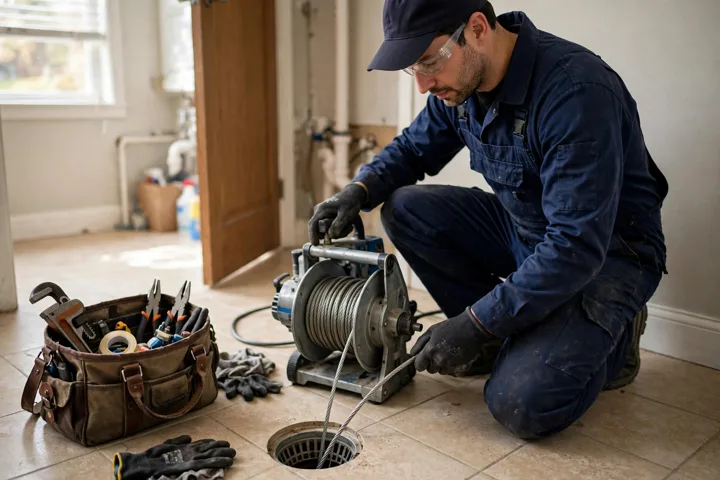
Drain Cleaning
Snaking and clearing for sinks, tubs, toilets, and main lines, with the cause found, not guessed.
Learn more
Emergency Drain Service
Backups and sewage overflows answered fast, with a crew that shows up ready.
Learn more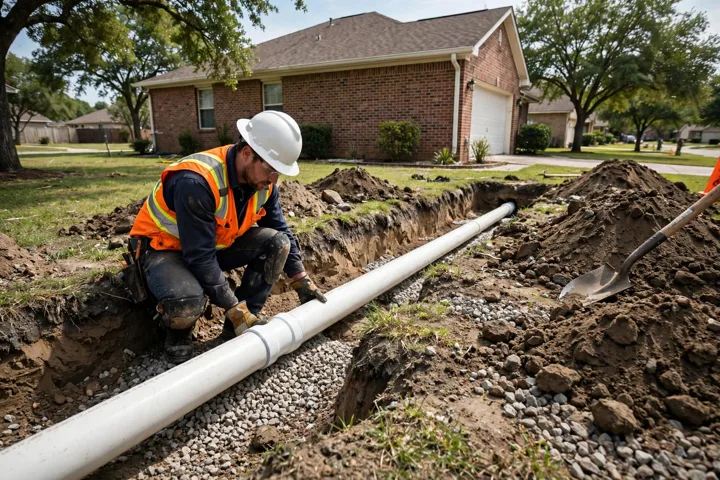
Sewer Line Replacement
Full line replacement in clay and cast iron country, bedded and graded to drain properly.
Learn more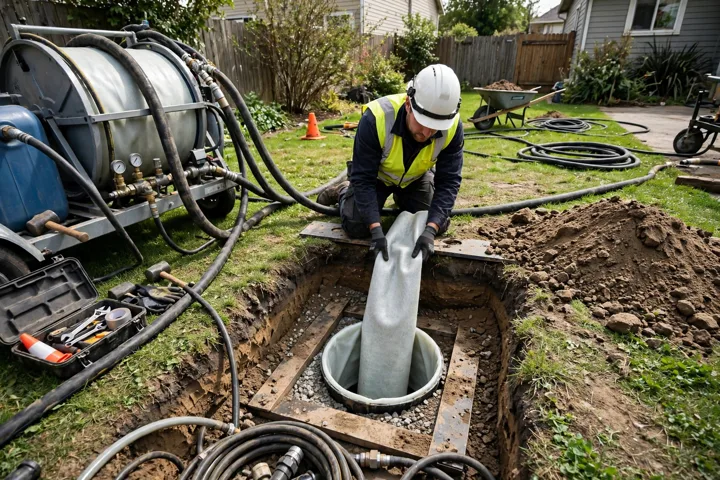
Trenchless Sewer Repair
Pipe lining and bursting that renew the line through small access points, not a torn up yard.
Learn more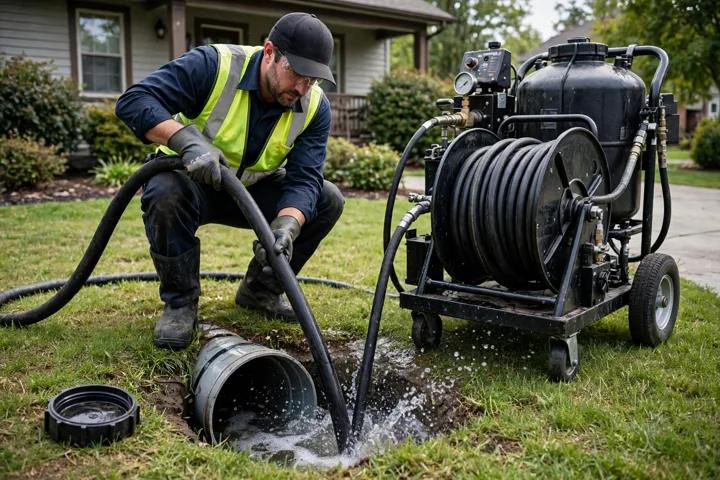
Hydro Jetting
High pressure water scouring that strips grease, scale, and roots back to a clean pipe wall.
Learn more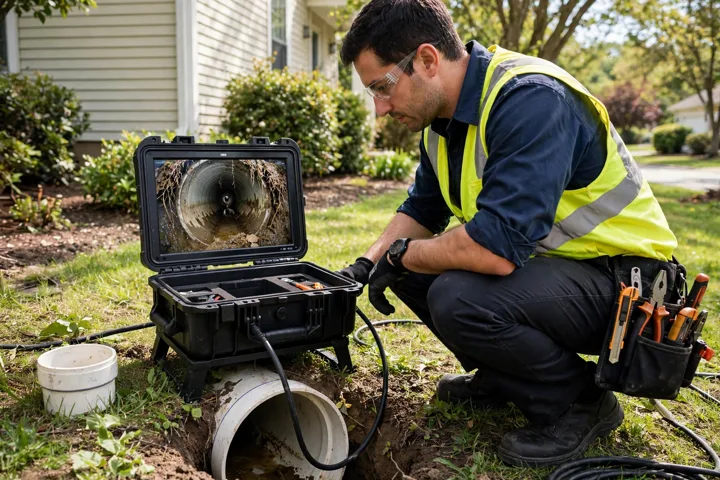
Sewer Camera Inspection
A recorded look inside the line: roots, cracks, bellies, and offsets, shown to you on screen.
Learn moreKeep Reading
Related pages worth opening next, with the ground detail that belongs to each one.
Rowlett
Drain and sewer service for Rowlett homes, from a crew that serves the Rockwall lake footprint.
Learn moreWylie
Drain and sewer service for Wylie homes, from a crew that serves the Rockwall lake footprint.
Learn moreDrain and Sewer Cost Guide
What drives the price of drain cleaning, repair, replacement, trenchless, jetting, and camera work, no guesswork.
Learn moreDrain and Sewer FAQs
Straight answers to the questions Rockwall homeowners actually ask us, in plain language.
Learn moreIndustry reference: NASSCO publishes the condition-assessment resources the drain industry uses to grade a line before recommending a repair. NASSCO.