
Drain and Sewer Cost Guide for Rockwall, TX
No honest cost guide can quote your line without seeing it. This guide explains what actually drives cost, so you can read any quote with confidence.
Drain and sewer work in Rockwall does not have one honest price, because the work is not one job. A drain clearing, a sewer repair, a full replacement, a trenchless renewal, a jetting visit, and a camera inspection are different jobs with different drivers, and the figure for any of them depends on what the camera shows inside your line. This guide explains what drives the figure for each service, how to read a quote, and what a written scope should contain, so you can compare quotes on facts rather than on a phone guess. Real figures come only from a camera inspection and a written scope, never from a phone guess.
What drives the cost of drain cleaning
At a glance
- Which drain is blocked and what is blocking it.
- Access to the cleanout.
- Number of passes needed.
- Whether a camera look is included.
Drain cleaning looks simple from inside the house, and the figure for it depends on which drain is blocked and what is blocking it. A single fixture drain, such as a bathroom sink clogged with hair and soap scum, is a local job with a short run and a small cable. A kitchen run coated in grease is a longer job, because the coating has to be worked along the length of the run rather than cleared at one point. A main line blocked by a root mat is a different job again, because the mat sits further out, the cable is larger and longer, and the crew has to confirm the whole house drains afterward rather than just the fixture that called them out.
Access matters as much as the blockage. A cleanout that is easy to reach, clearly marked, and in good condition makes the job straightforward. A cleanout buried under landscaping, hidden behind stored items, or damaged so the crew has to work through a fixture instead, adds time and care to the same clearing. The time of the visit also plays a role in a practical sense: a clearing that resolves in one pass is different from a clearing that needs several passes, a second blockage downstream, or a follow-up camera look to confirm the cause. None of that is mysterious. It is the difference between a short local job and a main line job with a cause still to find.

The driver that matters most: clearing or clearing plus diagnosis
The most important cost driver for drain cleaning is whether the clearing is the whole job or only the first step. A simple local clog, cleared and confirmed, is a complete job. A main line clog that returns is not a cleaning problem. It is a cause problem, and the honest figure for that visit includes the camera look that finds the cause, because without it you will pay for the same clearing again. When you compare drain cleaning quotes, ask whether the figure covers the clearing alone or the clearing plus the diagnosis. Those are different scopes, and comparing them as if they were the same job will mislead you every time.
What drives the cost of sewer repair
Sewer line repair is priced by the failed section, not by the house, and the drivers start with location and access. A failed joint near a cleanout, in open ground, with a clear path for equipment, is a simpler repair than the same failed joint under a driveway, under mature landscaping, or at depth where the trench needs more care and more shoring. Depth matters because deeper pipe means more excavation, more care around other buried lines, and more restoration afterward. Length matters because a short spot repair opens less ground than a longer failed section, even when the repair method is the same.
Material and method are the next drivers. The pipe material being repaired, and the material used for the repair, affect both the work and the fittings involved. A repair that joins new pipe to older pipe needs care at the connection, because the two materials behave differently and the joint has to seal cleanly. The repair method matters too: a targeted open repair, a trenchless renewal, and a full replacement are different scopes with different equipment, different crew time, and different restoration afterward, and the figure follows the method rather than the symptom. Two homes with the same slow drain can need different repair methods, and their figures will differ accordingly.

The camera ties the drivers together
What the camera shows is the driver that ties the others together. A repair quote written from a description of a slow drain is a guess, and guesses get revised once the ground is open. A repair quote written from camera footage, with the defect located by distance and described by kind, is a scope: this section, this defect, this method, this restoration. That scope is what you should compare across crews. If one quote names the section and the method and another names only the symptom, the second quote is not cheaper. It is less defined, and the difference will show up later.
What drives the cost of replacement and trenchless work
Full sewer line replacement is driven first by length and depth. A longer run means more pipe, more excavation, more bedding, and more restoration, and a deeper run means more care at every stage. Access along the run matters as much as the run itself: a straight run across open lawn is simpler than a run that crosses a driveway, passes under mature trees, or threads between other buried lines. Ground conditions matter too, because clay that moves, ground that stays wet, and soil that collapses into a trench all change how the crew has to work and how the trench has to be supported.
Trenchless renewal is driven by a different set of factors, and comparing it directly to open replacement without naming those factors is a common source of confusion. Trenchless work is driven by whether the existing line qualifies: a line that holds its shape can often be renewed through small access points, while a line that has collapsed, lost its grade, or sagged into a deep belly may not qualify at all. It is also driven by the number and location of access points, the length of the run to be renewed, and how the connections where branch lines join the main are handled. A trenchless scope that names those details is a real scope. A trenchless figure quoted without camera footage is a guess with a modern label on it.

Restoration: the driver homeowners overlook
Restoration is a driver that homeowners often overlook until the job is done, and it belongs in every replacement and trenchless quote. Open replacement disturbs ground along the run, and the figure should say plainly what restoration is included: backfill, grading, sod or seed, driveway or walkway repair where the trench crossed them. Trenchless work disturbs less ground, but it still disturbs the access points, and the figure should say what restoration those points receive. A quote that leaves restoration vague is not a complete quote, even if its headline figure looks lower than a quote that names restoration in full.
What drives the cost of jetting and camera work
Hydro jetting is driven by the condition of the line and the length to be cleaned. A kitchen run coated in grease along its length takes a different jetting pass than a main line with a root mat at a few joints, and a long lateral takes longer to jet thoroughly than a short one. The camera findings before jetting matter here, because jetting is the right tool for a sound pipe that is coated or matted inside, and the wrong tool for a collapsed or badly bellied pipe. A jetting visit planned from camera footage is a cleaning job with a defined scope. A jetting visit sold without footage risks being a cleaning visit on a line that needed a repair, which means paying twice: once for the jetting, and again for the repair.
Camera inspection is driven by the length of the line to be surveyed and the access available. A short local look through a nearby cleanout is a simpler visit than a full lateral survey from the house to the street, with footage recorded and locations noted by distance. The value of a camera visit is not the footage alone. It is the footage plus the explanation: what each picture means, where each defect sits, and what fix follows from it. When you compare camera quotes, ask whether the figure includes recorded footage you can keep, locations by distance, and a plain language explanation at the house. A camera visit that leaves you with only a verbal summary is a thinner service than one that leaves you with evidence.

Combined visits: efficiency, not bundling
A related point applies to combined visits. A clearing plus a camera look in one visit is often more efficient than two separate visits, because the line is already open and the crew is already on site. But efficiency is not the same as bundling for its own sake. A combined scope should still name each part: the clearing, the camera survey, the footage, and the explanation. If a quote bundles them into one line with no breakdown, ask for the breakdown. You are entitled to know what each part of the work is, and a crew that can explain its scope can usually explain its figure too.
Cost factors by service
Use this table as a checklist, not as a price list. If a quote for one of these services does not address the factors in its row, the quote is incomplete, and the missing factor is where the surprise usually lives. A complete quote names its factors. An incomplete quote hides them.
| Service | Main cost factors |
|---|---|
| Drain cleaning | Which drain is blocked, what is blocking it, length of the run, access to the cleanout, number of passes needed, whether a camera look is included |
| Sewer line repair | Location of the failed section, depth, length of the section, access and ground above it, pipe material, repair method, restoration included |
| Sewer line replacement | Total length of the run, depth, access along the run, ground conditions, pipe material, restoration along the full trench |
| Trenchless sewer repair | Whether the line qualifies on camera, length to be renewed, number and location of access points, handling of branch connections, restoration at access points |
| Hydro jetting | Length to be jetted, coating or mat type, condition of the pipe on camera, whether a follow-up camera look is included |
| Sewer camera inspection | Length of the line surveyed, access to the cleanout, recorded footage provided, locations noted by distance, explanation at the house |
How to read a quote
A good quote reads like a scope, not like a sales line. It names the service, the location of the work by fixture or by distance along the line, the method to be used, what is included, and what is not included. It says what happens if the camera or the excavation reveals something different from what was expected, because sewer work sometimes does, and a quote that pretends otherwise is setting up a dispute. It names restoration plainly. It names the footage or the confirmation step that will show you the work is done. If a quote does none of that, it is not a quote you can compare. It is a number attached to a hope.
Compare quotes on scope first and on figure second. Two quotes with different scopes are not two prices for the same job, even if they use the same service name. One may include the camera survey, the restoration, and the follow-up check, while the other includes only the clearing or only the excavation. The fuller scope may carry a higher figure and still be the better value, because it includes work the thinner scope will charge for later or leave undone. Ask each crew to break its figure into its parts, and ask what changes the figure if the camera or the excavation shows something different. A crew that answers those questions clearly is a crew that has thought about your line, not just about your signature.
Urgency is not evidence
Watch for quotes that rely on urgency instead of evidence. A backup is urgent, and the clearing part of a backup visit is urgent work. But a repair or replacement recommendation made during a backup visit, without camera footage, is not urgent in the same way. It is a major scope decision, and it deserves footage and a written scope even when the clearing itself could not wait. We will clear a backup first and talk repair from footage second, and we recommend you hold any crew to that order, including us. Urgency justifies the clearing. It does not justify skipping the camera.
What a written scope should contain
A written scope is the document that turns a conversation into a job, and it should contain enough detail that another crew could read it and understand what was agreed. It should name the service and the method in plain language, the location of the work by fixture or by distance along the line, the length or section to be worked on, the access points to be used, and the restoration included afterward. It should name the camera findings it is based on, so the scope is tied to evidence rather than to a description of a symptom. It should say what is not included, because exclusions are where misunderstandings live. And it should say what happens if conditions differ from what the camera showed, so a change during the job is a defined step rather than an argument.
A written scope should also name the confirmation step. For a cleaning, that step is running water through every fixture on the line and watching it drain quietly. For a camera survey, it is the recorded footage and the explanation at the house. For a repair or replacement, it is a follow-up camera look or a defined test that shows the repaired section flows and connects cleanly. A scope without a confirmation step is a scope that ends when the crew leaves, rather than when the work is proven. Ask for the confirmation step in writing, and hold the job to it.

Keep the scope and the footage
Keep your written scope after the job, along with any camera footage. That record is the history of your line, and it makes the next visit simpler and cheaper to scope, because the next crew starts from evidence rather than from scratch. A line with a history is a line that gets better advice over time, and a homeowner with a scope and footage in hand is a homeowner who can compare the next quote on facts.
Questions to ask any crew
Ask these questions before you approve any drain or sewer scope, and judge the answers on specifics rather than on confidence. What did the camera show, and can I see the footage. Where exactly is the defect, by distance or by fixture, and what kind of defect is it. Why is this method the right one for this defect, and why is the alternative method not right. What is included in the figure, and what is not included. What restoration is included, and what does the yard or driveway look like when you leave. What happens if the excavation or the next camera pass shows something different. What confirmation step will prove the work when it is done. A crew that answers those questions with footage, locations, and specifics is a crew that has done the diagnosis. A crew that answers with reassurance alone has not.
Ask also about the cause behind the symptom, because the cause decides whether the fix will hold. If the same drain has clogged before, ask what was different about this clearing, and what will keep it from clogging again. If the recommendation is a repair, ask what the rest of the line looks like on camera, and whether a spot repair or a fuller renewal is the honest scope. If the recommendation is jetting, ask whether the pipe is sound enough for jetting, and whether a follow-up camera look is included. Those questions are not confrontational. They are the questions a careful homeowner should ask, and a careful crew should welcome them.
Real figures come only from a camera inspection and a written scope, never from a phone guess. A phone call can describe a symptom, and a phone call can arrange a visit, but it cannot see inside a sewer line, measure a failed section, or judge ground conditions above it. Any figure given over the phone, before a camera has been in the line and a scope has been written, is a guess, and a guess that turns into a job is how homeowners end up paying for the wrong scope. Call us with the symptom, let us look inside the line, and judge the figure from the footage and the written scope that follow. That order protects you, and it is the order we work in on every job.
The questions we hear most are answered on the FAQs page.
Related Services
One trade, seven services. Every service below is drain and sewer only.
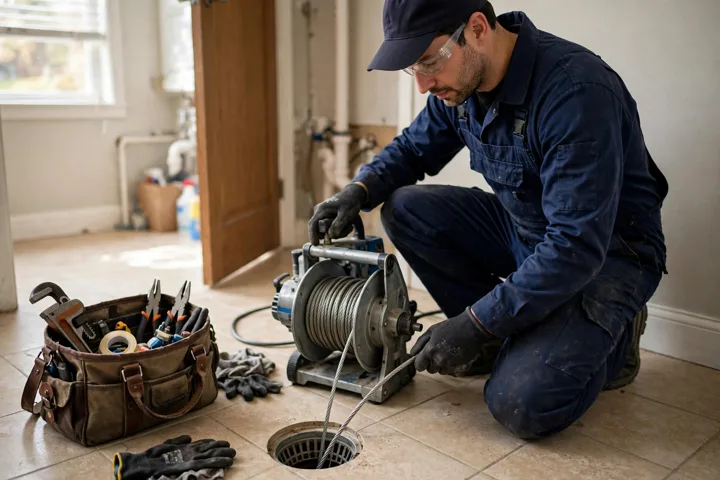
Drain Cleaning
Snaking and clearing for sinks, tubs, toilets, and main lines, with the cause found, not guessed.
Learn more
Emergency Drain Service
Backups and sewage overflows answered fast, with a crew that shows up ready.
Learn more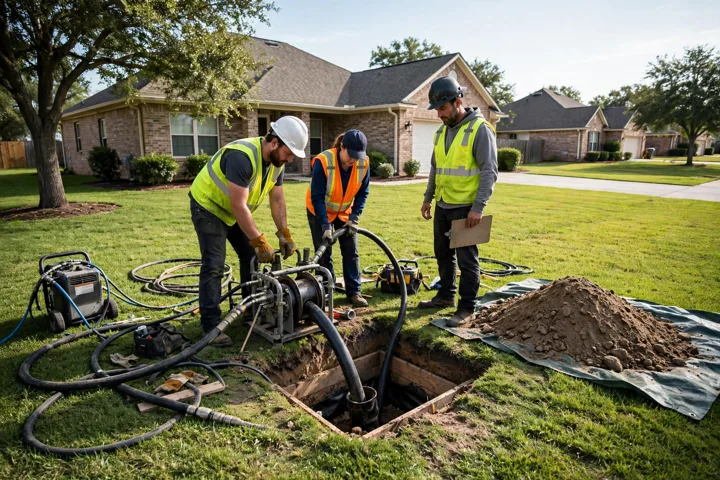
Sewer Line Repair
Spot repairs and section fixes, located by camera first, so we open only what must be opened.
Learn more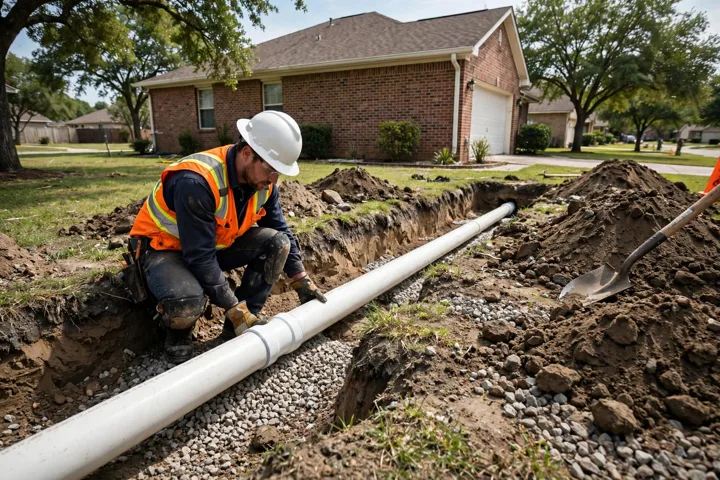
Sewer Line Replacement
Full line replacement in clay and cast iron country, bedded and graded to drain properly.
Learn more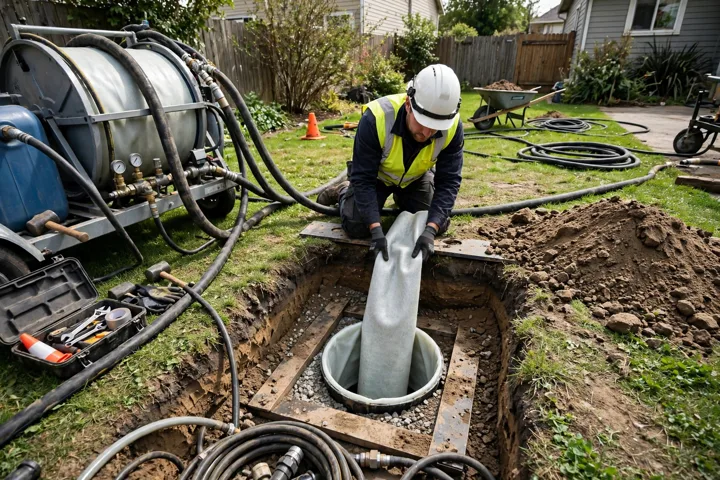
Trenchless Sewer Repair
Pipe lining and bursting that renew the line through small access points, not a torn up yard.
Learn more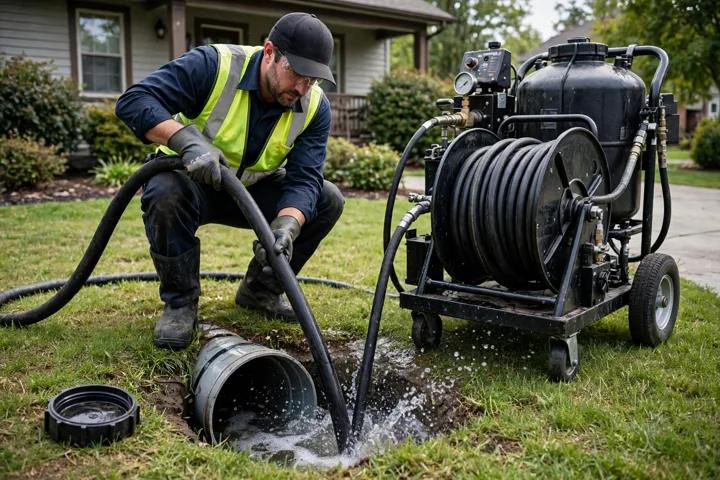
Hydro Jetting
High pressure water scouring that strips grease, scale, and roots back to a clean pipe wall.
Learn more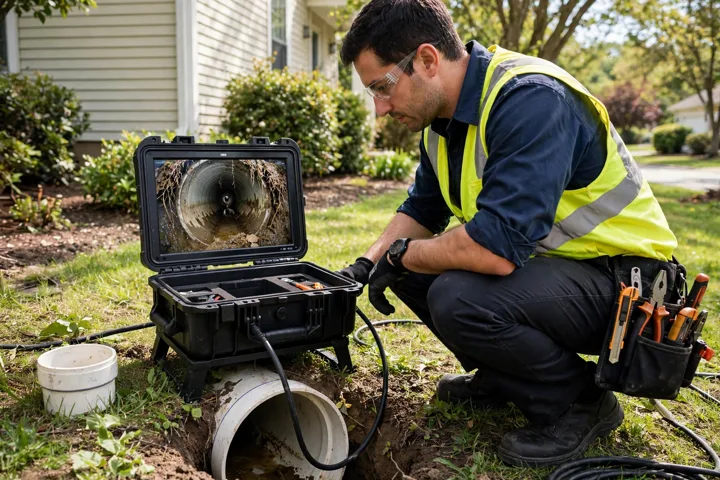
Sewer Camera Inspection
A recorded look inside the line: roots, cracks, bellies, and offsets, shown to you on screen.
Learn moreKeep Reading
Related pages worth opening next, with the ground detail that belongs to each one.
Rowlett
Drain and sewer service for Rowlett homes, from a crew that serves the Rockwall lake footprint.
Learn moreWylie
Drain and sewer service for Wylie homes, from a crew that serves the Rockwall lake footprint.
Learn moreDrain and Sewer FAQs
Straight answers to the questions Rockwall homeowners actually ask us, in plain language.
Learn moreAll Drain and Sewer Services
Seven services, one trade. Nothing else on the truck, nothing else on this site.
Learn moreRequest Service
Tell us what is happening and we will take it from there. We respond fast, and we show you the problem on camera before we quote the fix.