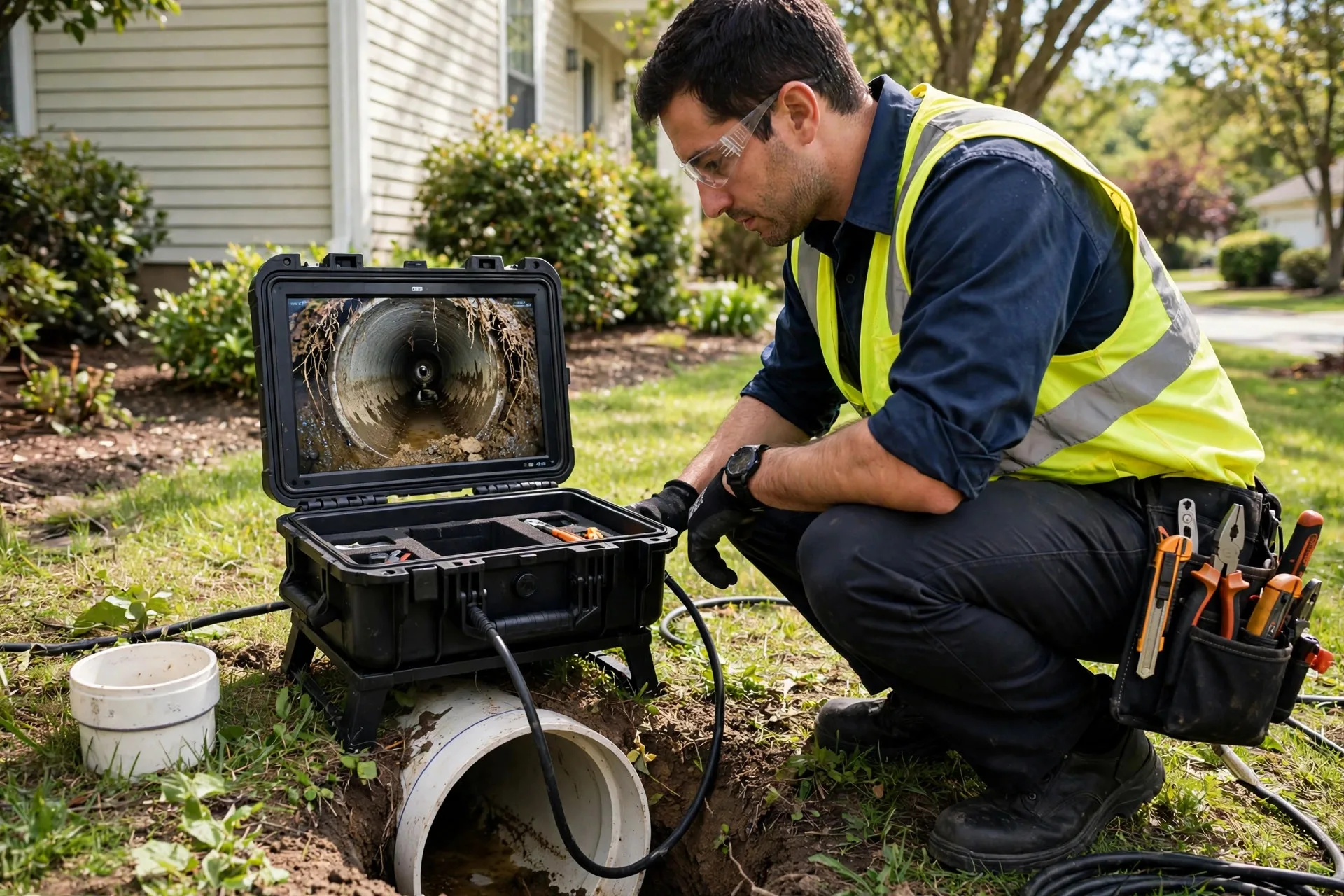
Sewer Camera Inspection in Rockwall, TX
Every honest sewer decision starts with seeing the line. We run the camera, show you the footage on screen, and explain what it means before we quote anything.
Request Service
Tell us what is happening. We respond fast, and we show you the problem on camera before we quote the fix.
Sewer camera inspection Rockwall TX is the work of pushing a camera through your sewer line from the cleanout and watching the inside of the pipe on a monitor, so a diagnosis is based on footage instead of a guess. We record the run, show you what we see while we are still at your house, and give you a written report that names each finding, what it means, and what fix it points to. A camera inspection does not fix a line. It tells you whether your line needs a cleaning, a repair, a renewal, or nothing at all, and that answer is worth more than any clearing done blind, because every fix that follows it is aimed at a defect that is actually there.
Sewer camera inspection Rockwall TX: what the camera shows
The camera shows the inside of your pipe, and that inside has a small set of findings that explain almost every drain problem in Rockwall. Roots are the first, and they read plainly on the monitor: fine hairs growing through a joint gap, thickening into a mat that catches paper and grease. A light root intrusion at one joint is a maintenance finding. A heavy mat at several joints is a repair finding, because the joints themselves are open and will keep admitting roots until they are sealed or the run is renewed. The camera also shows where the roots entered, joint by joint, so the repair conversation is about specific joints, not about roots in general.
Cracks are the second finding, and they vary in meaning with their size and their place. A hairline crack in an otherwise sound pipe is a watch finding: the pipe still holds its shape and drains, but the crack is a future root entry and a place the wall will weaken. A crack that runs around the pipe, or a section cracked in several places, is a repair finding, because the wall is failing rather than merely marked. The camera shows the crack in context, with the pipe around it, so you can see whether the rest of the run is sound or whether the crack is one symptom of a run that is failing along its length. That context is what a guess cannot give you.
| Finding | What the camera shows |
|---|---|
| Roots | hairs at joints thickening into mats. |
| Cracks | hairline watch findings versus wall failure. |
| Bellies | standing water where the line sags. |
| Offsets | steps where one section dropped below the next. |
| Scale | bore narrowing, most common in older cast iron. |
| Collapse | a pipe that lost its shape, a replacement finding. |

Bellies and offsets: grade and joint steps
Bellies are the third finding, and they are the most misunderstood. A belly is a sag in the line where water stands instead of flowing. On camera, you see the water level sit in the pipe even when no fixture is running, and you see debris settle in that standing water. A shallow belly that still drains is a judgment call, and we say so. A deep belly that holds water across a long section is a grade failure, and no cleaning will fix it, because the pipe cannot drain uphill out of its own sag. The camera measures a belly by showing it, not by a number on a report: you see the standing water, you see how long the section is, and you see whether debris is collecting there. That picture is the basis for a regrade conversation, not a cleaning sale.
Offsets are the fourth finding. An offset is a joint where one pipe section has dropped a step below the next, usually because clay movement shifted the bedding under one section and not the other. On camera, an offset looks like a step in the pipe, with a lip that catches paper and a gap that admits roots. A small offset that still drains is a watch or spot repair finding. A large offset that blocks the bore or admits a heavy root mat is a repair finding. Offsets matter because they are the joint failures that clay movement causes most often in Rockwall, and they are invisible from outside the pipe. A crew that has not cameraed the line cannot know an offset is there, and will keep clearing the clog the offset keeps causing.
Scale and collapse: bore and shape
Scale and collapse round out the taxonomy. Scale is buildup on the inside wall, rough and narrowing, most common in older cast iron, and it reads as a bore that gets smaller as the camera travels. Scale alone is a cleaning finding when the wall underneath is sound, and a repair finding when the wall underneath is too thin to drain well even when clean. Collapse is the end of the scale: a section where the pipe has flattened, broken open, or caved in, with soil or debris in the bore. Collapse is never a cleaning finding and never a watch finding. It is a replacement finding for that section, and the camera shows its location and its length so the replacement is aimed at the failed section rather than the whole yard. Six findings, each with its own meaning, each visible on the same footage, and each pointing to a different next step. That taxonomy is the working core of sewer camera inspection Rockwall TX service, because a crew that can name what it sees can also name what should happen next.
How an inspection runs
An inspection runs from the cleanout, and it starts before the camera goes in. We find the cleanout, usually a capped pipe near the house wall or in the yard, and we check that it gives a clear path into the main line. If the cleanout is buried, damaged, or missing, we say so and talk about access before we start, because a camera that cannot enter the line cleanly cannot give a clean reading. We also ask which fixtures are giving trouble and in what order, because that history tells us where to look hardest: a toilet that gurgles when the washer runs points downstream of both fixtures, while a single slow sink points to a branch that may not be on the main camera run at all. The inspection is aimed, not random, and your description of the symptoms is part of the aiming.
Then the camera goes in. The camera head travels the line on a push cable, and the monitor on site shows the inside of the pipe in real time. We watch it with you, not in a separate room or after the fact, and we explain what is on the screen as it passes: this is a sound joint, this is a root hair at a joint, this is standing water in a belly, this is scale narrowing the bore. Watching live matters, because a recorded video watched later cannot answer your questions, and because seeing a root mat with your own eyes changes the conversation from trust to fact. You do not need to know pipe terminology to read the footage. Roots look like roots. Standing water looks like standing water. A collapsed section looks broken, because it is broken.
The recording is yours: footage plus a map
The camera records as it travels, and that recording is yours to keep. The recorded footage is the inspection deliverable, along with the written report, and it has value beyond the visit. Another crew can watch it and give you a second opinion without re-running a camera. A buyer can watch it before closing. A repair crew can plan from it without guessing. We mark locations on the footage as we go, noting how far along the run each finding sits and which fixture or branch it sits near, so the footage is not just a video of a pipe but a map of your line. Distance markers and fixture references turn a recording into a document you can act on, and a crew that hands you unmarked footage has handed you a puzzle, not a report.
At the end of the run, we camera back out, checking the sections we passed on the way in for anything the first pass missed, and we run water through the fixtures on the line to see how the line behaves under flow with the findings we just mapped. A belly that holds water on camera and drains slowly under flow is a different finding from a belly that holds water on camera but drains fine under flow, and the flow check is what separates them. Then we sit down with the footage and the report, walk through each finding, and talk about what fix, if any, each one points to. The inspection ends with a plan, not with a vague recommendation to call us back. If the line is sound, the plan is nothing, and we say that plainly, because a clean bill of health is a legitimate and welcome result.
Reading your inspection report: each finding, what it means, and what fix it points to
A good inspection report reads like a map, not like a sales letter. Each finding gets its own entry: what it is, where it sits along the run, how severe it is, and what fix it points to. A root entry names the joints affected and the weight of the intrusion, light hairs versus a heavy mat, and it points to a cleaning and joint plan for light intrusion or a repair or renewal plan for heavy intrusion at several joints. A crack entry names the crack pattern, hairline versus circumferential versus multiple, and points to watching, spot repair, or renewal depending on that pattern. A belly entry names the standing water and the length of the sag, and points to watching for a shallow belly or regrading for a deep one. An offset entry names the step and the gap, and points to a spot repair at that joint or a renewal of the run when offsets repeat along its length.
Scale entries need the most careful reading, because scale hides the true bore. A scale entry should say how much bore is left after cleaning, not just that scale is present, because a line that is scaled but still wide drains well once cleaned, while a line that is scaled down to a narrow bore drains poorly even when clean. The report should separate those two cases plainly, because they point to different futures: one to periodic cleaning, the other to replacement of the narrowed section. A collapse entry is the simplest to read and the hardest to hear: it names the collapsed section and its length, and it points to replacement of that section, because no cleaning or lining method renews a pipe that has lost its shape. The report does not soften that entry, and neither do we when we walk through it with you.
What is sound matters as much as the defects
The report also names what is sound, and that matters as much as the defects. A run that is sound except for one bad joint points to a spot repair, not a full replacement, and the report should make that scope clear so you are not sold a whole line renewal for a single joint failure. A run that is sound throughout points to nothing, and the report should say so, because a homeowner who paid for an inspection deserves to hear that their line is fine when it is fine. The fixes the report points to are links, not lectures: a root heavy run points to the sewer line repair page for joint work or the trenchless renewal page for a renewal that seals the run, a grease or scale coated run points to the hydro jetting page for a scouring clean, and a collapsed or bellied section points to the sewer line replacement page for the trenched fix. Each link is a summary pointer, not a competing explanation, because the repair pages carry their own full detail and the report carries the finding that sends you there.
One more thing a report should do, and ours does: it should separate findings from recommendations. A finding is what the camera saw. A recommendation is what we think you should do about it, and in what order when several findings compete. A line can carry a light root intrusion, a shallow belly, and a scaled section all at once, and the recommendation should rank them: fix the belly first if it is the cause of the backups, clean the scale next, watch the roots. Without that ranking, a report is a list of problems with no path through them. With it, you can phase the work, starting with the defect that causes your symptoms and leaving the watch items for a later camera check. That ranking is judgment, and it is the part of the report that comes from experience rather than from the camera alone.
Buying a home: the pre-purchase scope and what it protects you from
A pre-purchase camera scope is the cheapest insurance a Rockwall homebuyer can buy, and it is the inspection most often skipped. A home inspection looks at what can be seen: fixtures, water pressure, visible leaks. It cannot see inside a buried sewer line, and a sewer line is one of the most expensive hidden systems in a house to repair. A line that drains fine on the day of the showing can carry a belly, a root mat, or a cracked section that will become a backup in the first season of heavy use, and the buyer who discovers that after closing owns it outright. The camera before closing discovers it while the seller still owns it, and while the price and the repair responsibility are still negotiable.
The pre-purchase scope runs the same way as any inspection, from the cleanout through the main line, with recorded footage and a written report, but its audience is different. It is written for a buyer and a buyer's agent, in plain language, with each finding tied to the fix it points to and the section of the run it affects. A light root intrusion at one joint reads as a maintenance item, not a deal breaker. A collapsed section or a deep belly reads as a major repair, with a location and a length that a repair crew can price from. That specificity is what makes the scope useful in a negotiation: a vague warning about old pipes moves no price, while a report naming a collapsed section with footage to back it moves the conversation to facts.

Rockwall housing and the pre-purchase scope
Rockwall housing makes the pre-purchase scope especially pointed. The median build year here is 2003, with about 62 percent of homes built in 2000 or later, so many buyers assume the sewer line is young and therefore sound. Young pipe in clay still shifts at the joints, still takes root intrusion, and still sags where the bedding moves, and a newer home with a bellied lateral is not a rare find. Homes built before 1990 make up about 23 percent of the city, and pre-1980 homes about 7 percent, and those older homes often carry cast iron that has scaled narrow over time, a condition that reads plainly on camera and not at all on a walkthrough. Age is a hint, not a verdict, in either direction, and the camera is the verdict. We scope newer homes and older homes with the same care, because the ground does not respect the build year.
The protection a pre-purchase scope gives you is not just financial. It is also practical: you move in knowing whether your line needs work, what work, and where, instead of discovering it through a backup in your first month. If the scope comes back clean, you move in with a baseline recording of a sound line, and any future problem can be compared against that baseline to show what changed. If it comes back with findings, you move in with a plan, priced and phased, instead of a surprise. Either way, the scope pays for itself in knowledge, and knowledge before closing is the only kind that can still change the deal. That is why a sewer camera inspection Rockwall TX buyers order before closing is written for negotiation, with findings, locations, and fixes stated plainly enough for an agent to act on.
Buyers in Rowlett and Wylie get the same pre-purchase scope, written the same plain way, because the ground and the trees do not stop at the city line.
Recurring clogs: inspect before the next clearing, not after the fourth
A drain that clogs once is an event. A drain that clogs again is a pattern, and a pattern is asking for a camera, not for another clearing. The logic is simple and it is worth stating bluntly: every clearing that does not find the cause leaves the cause in place, and the cause will clog the line again. A root mat cut through grows back. Grease recoats a wall that was never stripped. A belly refills with standing water the moment the clearing crew leaves. An offset joint catches paper again on the next flush. The fourth clearing costs as much as the first three combined in frustration, and it still leaves the cause untouched. The camera after the second clog, at the latest, breaks that cycle by naming the cause, and the fix that follows it is aimed at the cause rather than at the symptom.
We see this pattern most clearly in main line calls, where several fixtures slow together or a toilet gurgles when the washer runs. Those symptoms point downstream, to the main line, and the main line is where the camera earns its keep fastest, because the main line is long, jointed, and exposed to clay movement and roots along its whole length. A camera pass on a repeat main line clogger almost always finds something specific: a root mat at two joints, a belly under the yard, an offset where the line crosses a bed, a scaled cast iron section that has narrowed to a trickle. Each of those findings points to a different fix, and each fix is cheaper and cleaner than another year of emergency clearings. The camera does not just find the cause. It stops the spending cycle that a cause left unnamed creates.
There is a temptation to clear first and camera later, because clearing restores flow today and cameraing feels like an extra step. We understand that temptation and we argue against it gently but firmly: clear the line so the house can function, by all means, but camera it in the same visit, while the crew is there and the cleanout is open, so the cause is mapped before the next clog has a chance to form. A clearing plus a camera in one visit costs less in total than a clearing now and a camera later, and it gives you the plan on the same day you get the flow back. When we clear a repeat clogger without cameraing, we say so and we say why, usually because the line is fully blocked and the camera cannot pass until the blockage is opened. In that case the camera follows the clearing in the same visit, as soon as the line will admit it, because a cleared line that has not been cameraed is a line whose cause is still unknown.
What the camera cannot see: limits stated honestly
A camera is a powerful tool with real limits, and a crew that does not state them is overselling the tool. The camera sees the inside of the pipe. It does not see the outside of the pipe, the bedding under it, the soil around it, or the lines buried near it. A pipe that looks sound inside can sit in unstable bedding that will shift it next season, and the camera cannot warn you about that bedding. A root mass wrapped around the outside of a pipe, pressing it inward, reads on camera only as a narrowing or a deformation, not as the external cause behind it. The camera shows the effect. The ground outside the pipe stays hidden, and any recommendation that depends on the outside of the pipe depends on the site walk and the crew's judgment alongside the footage, not on the footage alone.
The camera also cannot see through a fully blocked line, through standing sewage that fills the bore, or around a sharp bend that the camera head cannot navigate. A line that is blocked solid needs a clearing pass before the camera can travel it, and the clearing pass itself can disturb the evidence, washing debris downstream or cutting a root mat that the camera would otherwise have mapped in its original state. We camera after clearing in those cases and we say so, because the footage is a post clearing picture, not a pristine one. A line with a bend too sharp for the head, or a branch too small for the camera, has sections the inspection cannot reach, and the report names those unreachable sections instead of pretending the whole system was seen. An honest report marks its blind spots. A dishonest one hides them by omission.
What the camera cannot settle: responsibility and the future
The camera also cannot assign responsibility by itself. The footage shows where your private run travels and where it meets the larger main, and the crew confirms that boundary on site from what the camera shows and what the ground and the cleanout layout reveal. What the camera cannot do is settle a question about who owns or maintains any section of pipe, because that question depends on facts outside the footage, and we do not present footage as proof of an ownership rule. If a finding sits near the boundary between your run and the larger main, we mark its location precisely on the footage and we tell you to confirm the boundary with the crew on site and with the appropriate authority before any repair is priced, because a repair aimed at the wrong side of a boundary is a wasted repair. The camera gives you location. Location plus on site confirmation gives you a plan.
Finally, the camera cannot predict the future. It shows the line as it stands on the day of the inspection, and a line that is sound today can develop a root intrusion, a belly, or a crack as clay moves and trees grow. An inspection is a snapshot, not a warranty, and we do not sell it as one. What a clean inspection does give you is a baseline: footage of a sound line, dated and kept, against which any future inspection can be compared to show what changed and where. That baseline is genuinely valuable, and it is the honest version of a promise about the future. The line will change. The baseline lets you see how.
After the inspection: the written scope and how quotes follow it
After the inspection, you get a written scope, and the scope is what quotes follow, not the other way around. The scope names each finding, its location along the run, its severity, and the fix it points to, in the ranked order the report established. A quote that follows the scope prices the fix for the finding it names: a spot repair at the offset joint the camera marked, a jetting pass for the grease coated section the camera mapped, a renewal for the root heavy run the camera charted, a replacement for the collapsed section the camera located. A quote that does not follow the scope, that prices a whole line renewal for a single joint finding, or a cleaning for a collapsed section, is a quote that has drifted from the evidence, and the scope is your tool for spotting that drift. Keep the footage and the scope together, and show both to any crew that quotes the work.
Quotes also follow the scope in their phasing. A scope with several findings does not demand that all of them be fixed at once, and a good quote reflects that, pricing the symptom causing defect first and the watch items as later phases with their own triggers. A belly that causes backups is phase one. A light root intrusion at a distant joint is a later phase, triggered by the next camera check showing it heavier. A scaled section that drains adequately after cleaning is a watch item, triggered by a future inspection showing the bore narrower. Phasing is not delay for its own sake. It is spending on the defect that hurts you now, and watching the defects that do not, with footage to tell you when watching should become fixing. A crew that insists every finding be fixed immediately, regardless of severity, is selling urgency, not following a scope.
Caruth Lakes and Lakeview Summit show why a written scope matters on lake lots, where laterals run long and findings can sit far from the house. Caruth Lakes homes carry mature landscaping that puts root pressure on lines earlier than the age of the house would suggest, and a scope there often maps root entries at several joints along a long run, which points to a renewal conversation rather than a series of spot repairs that chase joints one by one. Lakeview Summit brings the same lake effect, with ground that stays wetter longer and clay that moves on a different cycle, so a scope there often pairs root findings with a belly or an offset that the wet ground helped create, and the ranked order in the scope decides whether the joint work or the grade work comes first. Highland Meadows carries newer subdivisions where the drains are young but the ground is not settled, and a scope there often finds a single bad joint or construction debris in an otherwise sound line, which points to a spot fix rather than a renewal, and the scope is what keeps that job small and honest. Three neighborhoods, three different scopes, and in each case the quote that follows the scope is the quote that fits the house. That scope-first discipline is what makes sewer camera inspection Rockwall TX work useful beyond the visit itself, because the footage and the scope travel with the house to the next crew that quotes from them.
The inspection questions we hear most are answered on the FAQs page.

Will I get to keep the camera footage?
Yes. The inspection records the run as the camera travels, and that recording is yours to keep, along with the written report that names each finding, its location, and the fix it points to. Another crew can watch it for a second opinion without re-running a camera, and a future inspection can be compared against it to show what changed.
Does a camera inspection fix my drain?
No, and we do not sell it as a fix. An inspection diagnoses the line. It tells you whether you need a cleaning, a repair, a renewal, or nothing at all, and it aims the fix that follows at a defect that is actually there. A clearing done blind may restore flow today, but without footage it leaves the cause unnamed, and the cause will clog the line again.
My drains only clog once in a while. Do I still need a camera inspection?
If the same drain clogs more than once, or if several drains slow together, yes. A repeat clog is a pattern, and a pattern has a cause that a clearing alone does not remove. The camera names that cause, whether it is roots at a joint, a belly holding water, scale narrowing the bore, or an offset catching paper, and the fix follows the cause instead of repeating the clearing.
Can the camera see the whole sewer line, including under the yard?
It sees the inside of the pipe along the run it can travel, from the cleanout to the street connection in most homes, and it records that run with location markers. It cannot see the outside of the pipe, the bedding, or the soil around it, and it cannot pass a fully blocked section or a bend too sharp for the head. The report names any section it could not reach, so you know exactly what was seen and what was not.
Should I get a camera inspection before buying a house in Rockwall?
Yes. A standard home inspection cannot see inside a buried sewer line, and a line that drains fine on showing day can carry a belly, a root mat, or a cracked section that becomes a backup in your first season in the house. A pre-purchase scope finds those defects while the seller still owns them and the price is still negotiable, and a clean scope gives you a baseline recording of a sound line to compare against in the future.
Related Services
One trade, seven services. Every service below is drain and sewer only.
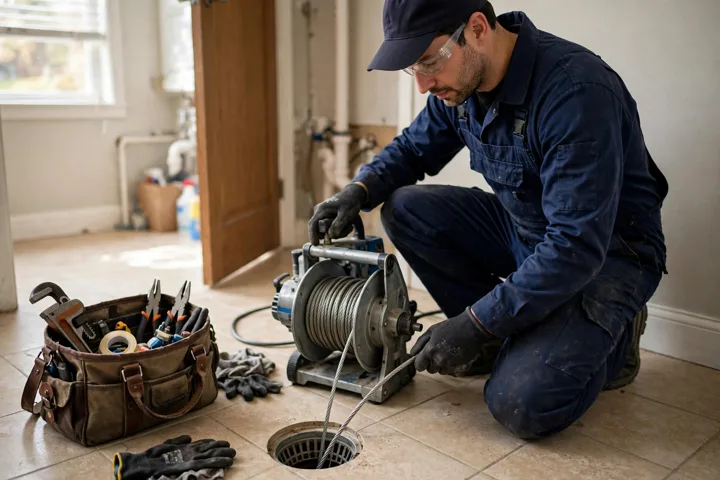
Drain Cleaning
Snaking and clearing for sinks, tubs, toilets, and main lines, with the cause found, not guessed.
Learn more
Emergency Drain Service
Backups and sewage overflows answered fast, with a crew that shows up ready.
Learn more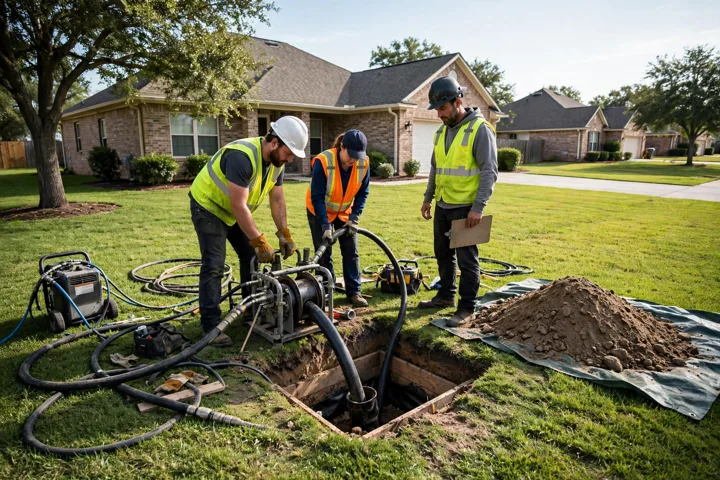
Sewer Line Repair
Spot repairs and section fixes, located by camera first, so we open only what must be opened.
Learn more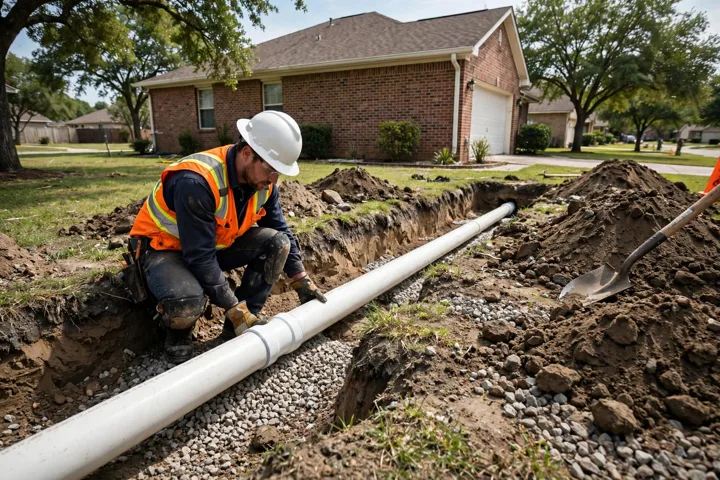
Sewer Line Replacement
Full line replacement in clay and cast iron country, bedded and graded to drain properly.
Learn more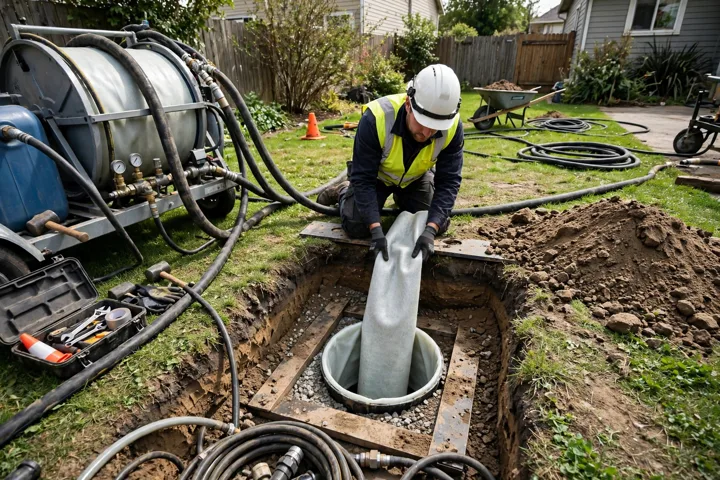
Trenchless Sewer Repair
Pipe lining and bursting that renew the line through small access points, not a torn up yard.
Learn more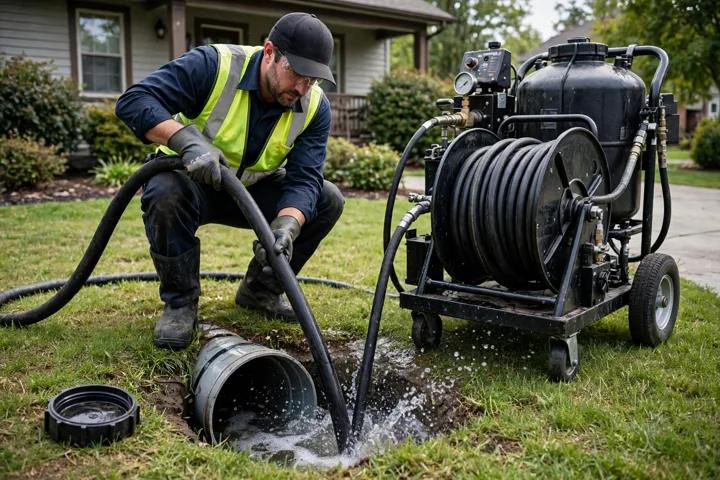
Hydro Jetting
High pressure water scouring that strips grease, scale, and roots back to a clean pipe wall.
Learn moreKeep Reading
Related pages worth opening next, with the ground detail that belongs to each one.
Rowlett
Drain and sewer service for Rowlett homes, from a crew that serves the Rockwall lake footprint.
Learn moreWylie
Drain and sewer service for Wylie homes, from a crew that serves the Rockwall lake footprint.
Learn moreDrain and Sewer Cost Guide
What drives the price of drain cleaning, repair, replacement, trenchless, jetting, and camera work, no guesswork.
Learn more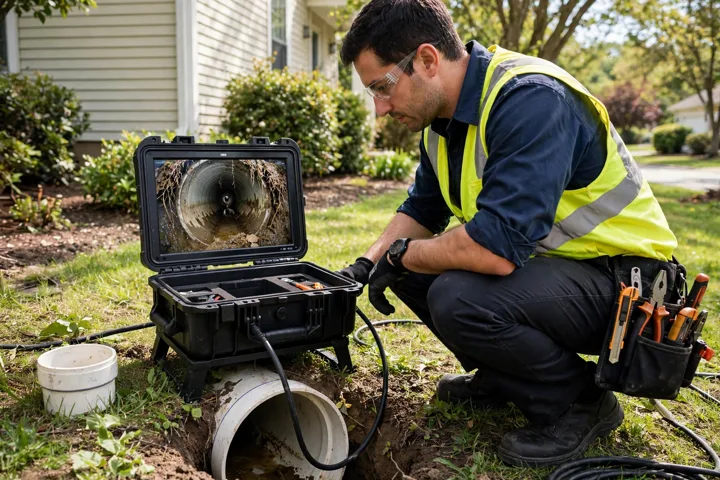
Drain and Sewer FAQs
Straight answers to the questions Rockwall homeowners actually ask us, in plain language.
Learn moreIndustry reference: NASSCO publishes the condition-assessment standards used to grade pipeline condition on camera. NASSCO.