
Contact Us
Tell us what is happening and we will take it from there. The form below reaches the crew directly.
Use the form below to tell us what your drain or sewer line is doing, and we will take it from there. The details you include in the form shape the visit more than most people expect, because drain work starts with the pattern: which fixtures are affected, in what order, and what the house was doing when it happened. Tell us that story plainly, and we will arrive with the right machine and the right plan for the line we are about to see.
What to include in the form
Start with what is happening, in plain language, as you would describe it to someone standing in your home. Is one sink slow, or are several fixtures slow together. Is water backing up anywhere, and if so, through which drain did it come up first. Is a toilet gurgling, is a sink bubbling when the tub empties, or is a drain simply slower than it used to be. Those descriptions are not just background. They are the first diagnosis, because a single slow fixture points to a local problem near that fixture, while several slow fixtures together point downstream, to the main line. The clearer your description, the closer our first plan will be to the real job.
Next, name which fixtures are involved, and the order in which they were affected. The order matters more than most callers realize. A kitchen sink that slowed first, followed by a bathroom, followed by the laundry, tells a different story from a laundry backup that arrived alone on a busy weekend. A toilet that gurgles when the washer drains tells us air is trapped behind a partial blockage, which is a different situation from a floor drain that fills when the toilet flushes. List every fixture that is slow, backing up, gurgling, or smelling, and put them in the order they showed trouble. If a fixture is working normally while others are not, say that too, because a normally draining fixture narrows the location of the blockage just as surely as an affected one does.
Then tell us what the house was doing when the trouble showed up. Was the laundry running, was the dishwasher running, had several people showered in a row, or did the problem appear on a quiet day with light use. Water use at the moment of failure tells us how much margin the line has left: a line that handles quiet days and fails on busy days has a partial blockage, while a line that fails on a quiet day has a blockage much further along. Also tell us whether this drain has clogged before, what was done last time, and how long the fix held. A first-time clog and a repeat clog are different jobs, and a repeat clog gets a camera look from the start, because clearing it again without looking inside is how the same clog gets paid for several times.
Finally, tell us about access if you know it. Do you know where your cleanout is, and is it reachable or buried under landscaping or stored items. Is there anything about the lot we should know before we arrive, such as a long driveway, a gate, or a section of yard that is hard to reach. Access details do not decide whether we can help, but they do decide how smoothly the visit goes, and a crew that arrives knowing the access situation can get to the line faster. If you do not know where your cleanout is, say so. We find cleanouts regularly, and not knowing is completely normal.
What happens after you submit
After you submit the form, your message reaches us as a drain or sewer inquiry with the story you just told, and we read it as a pattern before we respond. A backup report, where sewage is coming up or several fixtures are backing up together, is treated as urgent work, because a backup does not get better by waiting and every gallon added to the system pushes against a blockage with nowhere to go. A slow drain report is treated as a scheduled diagnosis, where the first visit clears the line, checks the whole house, and looks inside with the camera when the pattern calls for it. Either way, the response follows the pattern you described, not a generic script.
Expect questions back before a scope is discussed, because a scope written from a form alone would be a guess. We may ask which fixtures were affected first, whether the problem has happened before, or whether anything is backing up right now. Those questions refine the pattern and prepare the visit, so the crew arrives with the right cable size, the camera ready, and a plan that matches your line rather than a generic drain visit. If the pattern points to a main line problem, the visit plan will include a camera look once the line is clear, so the recommendation that follows is grounded in footage rather than in a description.
When the visit happens, the order of work is the order we describe on every page: questions, clearing, full-house check, camera when the pattern calls for it, footage on screen, written scope before bigger work. A drain that is truly clear drains quietly across the whole house, and we do not consider a visit complete until we have seen that. If the camera shows a defect that cleaning cannot fix, the repair conversation starts from the footage, with the location and the kind of defect named, so you can decide with the same facts we have. That is what happens after you submit: your story becomes a pattern, the pattern becomes a visit plan, and the visit produces evidence before it produces a quote for bigger work.
Service area
Rockwall is our home base, and the form reaches us for homes across Rockwall and the towns around the lake and the growth edge. We work Rowlett, where older pockets carry cast iron and decades of clay movement alongside newer subdivisions on the same shifting ground. We work Wylie, where growth homes sit on ground that still moves and young trees are already chasing water. We work Forney, a smaller town with the same ground problems on a wider mix of lots and home ages. We work Fate, where new growth homes carry builder-era laterals and young landscaping that is already testing the lines. We work Royse City, on the eastern edge of the footprint, where older and newer stock mix under the same clay and root pressure. And we work Heath, where lake homes carry longer laterals, mature tree root zones, and clay soil that shapes every sewer conversation.
If your home sits in one of those towns, tell us the town in the form along with your fixture story, because the town, the lot, and the housing era shape what the camera is likely to show, and a crew that knows the town arrives with a better first guess about the ground. If you are just outside that list, tell us anyway and describe the situation, because the footprint note below and the map will show you the area we cover, and a message with a clear fixture story is still the fastest way to get an honest answer about whether we can help. The map below shows the footprint we work, so you can see at a glance whether your town sits inside it.
A note on the map below
The map below shows the footprint we cover, with Rockwall at the center and the surrounding towns arranged around it. Use it as a quick check: if your town appears inside the footprint, the form is the right way to reach us, and your fixture story is the right way to start the conversation. If your town sits near the edge of the footprint, the same advice holds: send the form with the fullest description you can give, including the fixtures, the order, and the water use at the time, and we will answer from the pattern rather than from the map alone. The map shows where we work. Your message shows what your line is doing, and that is the part that decides the visit.
Related Services
One trade, seven services. Every service below is drain and sewer only.
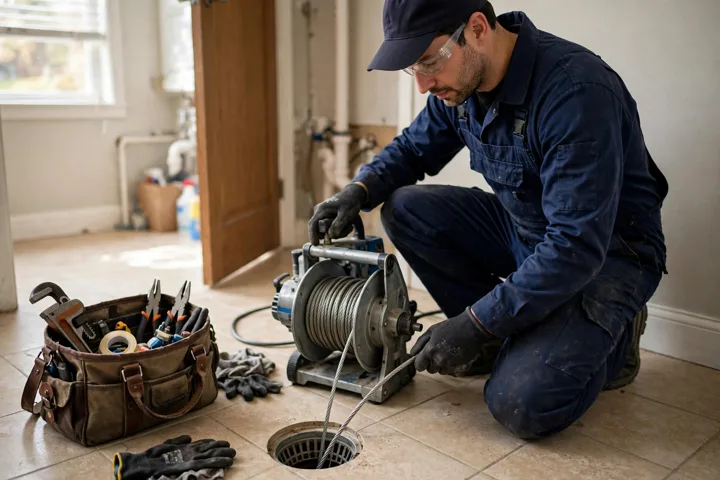
Drain Cleaning
Snaking and clearing for sinks, tubs, toilets, and main lines, with the cause found, not guessed.
Learn more
Emergency Drain Service
Backups and sewage overflows answered fast, with a crew that shows up ready.
Learn more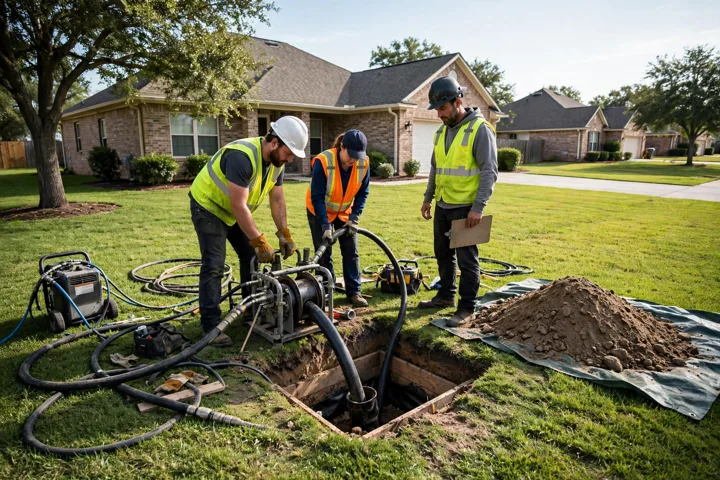
Sewer Line Repair
Spot repairs and section fixes, located by camera first, so we open only what must be opened.
Learn more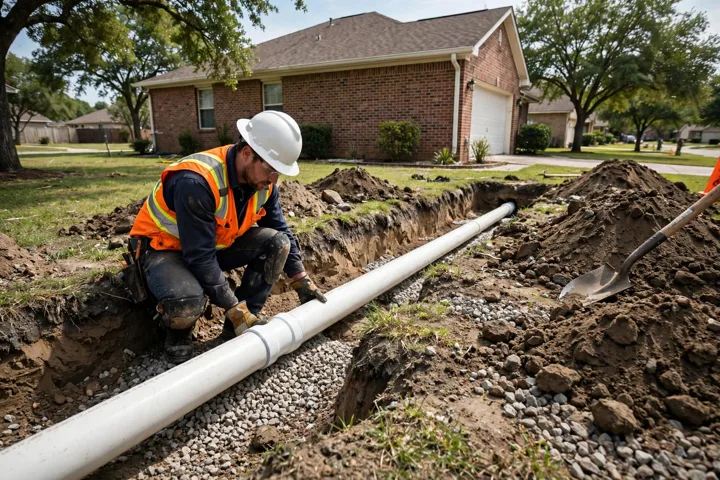
Sewer Line Replacement
Full line replacement in clay and cast iron country, bedded and graded to drain properly.
Learn more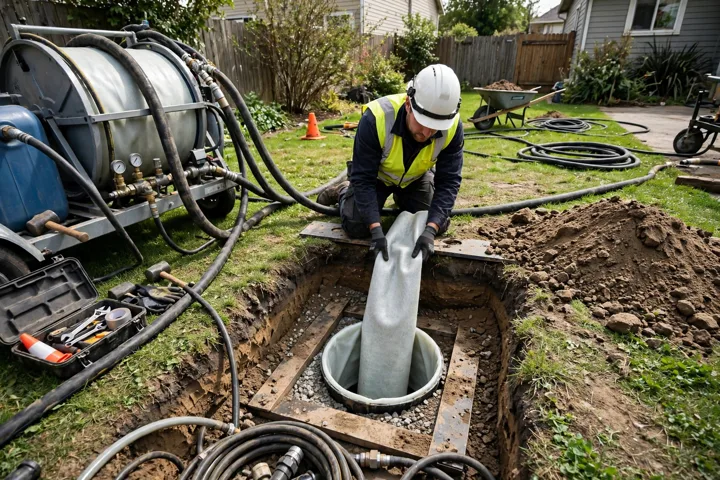
Trenchless Sewer Repair
Pipe lining and bursting that renew the line through small access points, not a torn up yard.
Learn more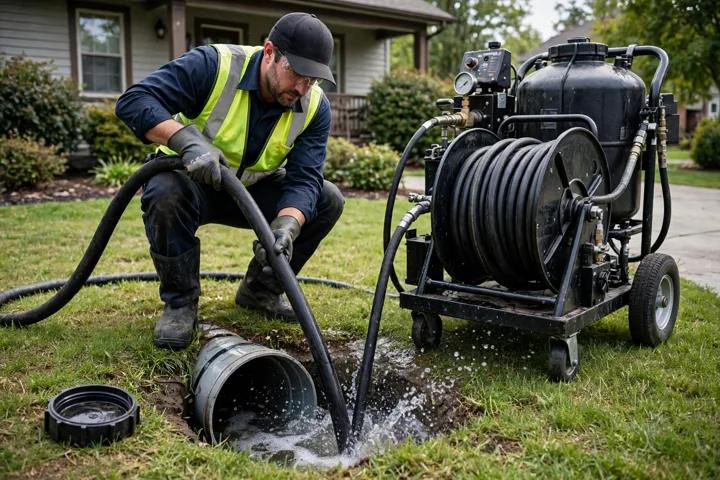
Hydro Jetting
High pressure water scouring that strips grease, scale, and roots back to a clean pipe wall.
Learn more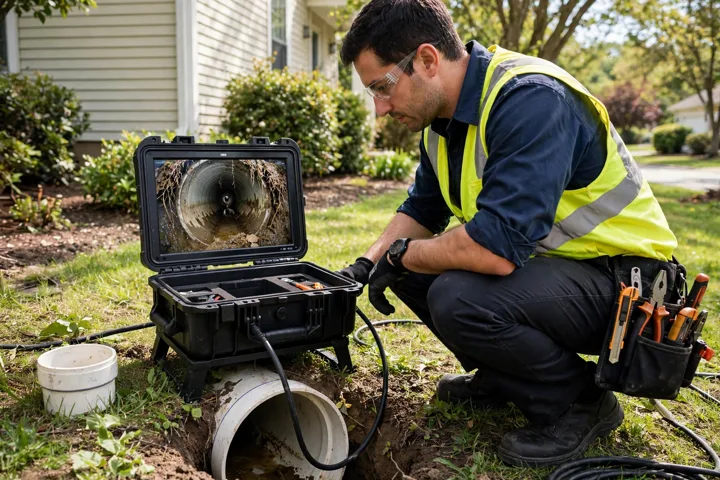
Sewer Camera Inspection
A recorded look inside the line: roots, cracks, bellies, and offsets, shown to you on screen.
Learn moreKeep Reading
Related pages worth opening next, with the ground detail that belongs to each one.
Rowlett
Drain and sewer service for Rowlett homes, from a crew that serves the Rockwall lake footprint.
Learn moreWylie
Drain and sewer service for Wylie homes, from a crew that serves the Rockwall lake footprint.
Learn moreDrain and Sewer Cost Guide
What drives the price of drain cleaning, repair, replacement, trenchless, jetting, and camera work, no guesswork.
Learn moreDrain and Sewer FAQs
Straight answers to the questions Rockwall homeowners actually ask us, in plain language.
Learn moreRequest Service
Tell us what is happening and we will take it from there. We respond fast, and we show you the problem on camera before we quote the fix.