
Drain Cleaning in Rowlett, TX
Rowlett is the older counterweight to Rockwall: older pockets, cast iron stock, and clay that has been moving lines for decades. We work that ground every week.
Yes, we provide drain cleaning in Rowlett, TX for homes across the town, from newer subdivisions to the older pockets where the ground and the pipe age work together against a drain. We are a drain and sewer crew only, and we work Rowlett with the camera ready, because a drain that keeps slowing down usually has a cause inside the line that a cable alone cannot show you. If one fixture is slow, we clear it and check the rest of the house. If several fixtures slow together, we treat it as a main line problem and we look inside before we recommend anything bigger.
Rowlett ground: older pockets and clay
Rowlett sits on the same expansive clay that shapes drain work across the Rockwall area, and that clay is the first thing to understand about a Rowlett drain. The soil swells when it takes on water and shrinks when it dries out, and it repeats that cycle every year. A sewer line buried in moving ground does not stay where the builder put it. Joints open a fraction at a time, low spots sag into bellies that hold standing water, and a pipe that drained cleanly for years can start slowing after a wet spring followed by a dry summer. Nobody did anything wrong to the drain. The ground moved it.
Rowlett adds a second layer to that story, and it is the age of the housing stock. The median build year here is 1999, which puts a large share of Rowlett homes right in the middle of the story: old enough for clay movement to have worked on the joints for decades, and old enough for the materials of their era to show their age. Older pockets, including Shady Acres with stock running from the 1970s to the 2000s, carry the mix that makes drain diagnosis interesting. A street can hold a 1970s home with cast iron inside, a 1990s home with a different set of joints and fittings, and a 2000s home with a newer lateral that still sits in the same shifting clay. We do not treat those three houses as the same job, because they are not.

Cast iron and joints: where Rowlett drains fail
Cast iron is the material to watch in the older Rowlett pockets. It does not usually fail in one dramatic break. It narrows from the inside as scale builds on the wall, year after year, until a normal day of use turns into a slow drain and then a backup. A cable can cut a channel through that narrowing and give you a few good weeks, which is exactly why a recurring clog in an older Rowlett home deserves a camera look rather than another clearing. The camera shows the bore of the pipe. If the bore is still open, cleaning is a sound spend. If the bore is closing up, cleaning buys time and nothing more, and you deserve to know that before you pay for it again.
Clay movement also explains why Rowlett drains fail at the joints before they fail anywhere else. A joint is where two sections of pipe meet, and it is where ground movement concentrates. When a joint opens even slightly, it gives roots a way in and gives paper and grease a place to catch. The drain does not clog overnight. It slows a little, then a little more, then it backs up on the day the house uses the most water. That slow build is why we ask Rowlett callers when the drain first started slowing, not just when it backed up. The timeline points at the cause.
Drain cleaning in Rowlett
Drain cleaning in Rowlett starts with sorting out which drain is actually in trouble. A single slow sink or tub is usually a local problem near that fixture: hair and soap scum in a bathroom run, or grease that has cooled and coated the wall of a kitchen run. Those clearings are straightforward, and we say so. We run the right size cable for that line, we run water through the fixture after the clearing, and we check the fixtures downstream of it to make sure the clearing held.
A different pattern means a different job. When the kitchen sink, a bathroom, and the laundry all slow down together, or when a toilet gurgles while the washer drains, the problem sits downstream of all of them, in the main line. That is the call where a basic snaking can mislead you. A snake cuts a channel through a root mat or a grease coat and the water starts moving again, so the visit looks successful. A few months later the mat grows back across the channel, or the grease recoats the wall, and the same drain clogs again. We see that cycle in Rowlett more than any other pattern, and the way out of it is to find out what the blockage is made of before you settle for another channel cut.
Clear first, then look inside
Our approach on a main line call is to clear the line first so the house can use water again, then look inside with the sewer camera inspection while the line is open. The camera shows roots as fine hairs growing through a joint, a belly as standing water that never drains away, a cracked section as a dark line across the pipe wall, and an offset joint as a step where one section has dropped below the next. Each of those pictures points to a different fix, and we walk you through the footage on screen before we quote anything. You should never have to take our word for what is inside a pipe you cannot see.
We also pay attention to how a Rowlett home uses water during the visit.
When the camera shows a coated or matted wall rather than a break, hydro jetting scours it clean in a way a cable never will. We run every fixture on the affected line and watch how each one drains. If one fixture still lags after the clearing, there is a second blockage downstream or the first one was only partly cleared. If everything drains but the line still gurgles, air is trapped behind a partial blockage the cable passed. A drain that is truly clear drains quietly across the whole house, and we do not pack up until we have seen that.

Sewer line repair in Rowlett
Some Rowlett drains reach a point where cleaning is no longer the honest answer, and that point is usually visible on camera. A sewer line repair in Rowlett means fixing the failed section of the line rather than replacing the whole run. That distinction matters, because a full run replacement is a bigger job with a bigger footprint in your yard, and it is not always what the line needs. If the camera shows one bad joint, one cracked section, or one short belly, the repair targets that section and leaves the sound pipe alone.
Two related terms come up often on repair calls, and it helps to keep them straight. Sewer pipe replacement means taking out a failed run and putting in new pipe along that length. Sewer pipe lining means renewing the inside of an existing pipe that still holds its shape, so the line gets a new inner surface without an open trench along its full length. Both are real fixes, and neither is right for every line. Replacement fits a line that has lost its shape, collapsed in places, or failed along much of its length. Lining fits a line that still holds its shape but has joints, cracks, or root entry points that keep causing clogs. The camera is what decides between them, and we show you the footage that supports the recommendation.
Repeat clogs and the limits of a repair
Repair calls in Rowlett often start with a repeat clog that a previous clearing did not hold. That history is useful evidence. A drain that clogs in the same place, in the same season, after the same kind of use, is telling you the line has a fixed defect at a fixed location. The camera locates that defect by distance from the cleanout, so the repair crew knows exactly where to dig or where to set up access, instead of opening ground on a guess. That precision is part of why a camera-first repair costs less disruption than a repair planned from a guess, even when the repair itself is the same work.
We also talk plainly about what a repair does not fix. Repairing one bad joint does not renew the rest of an aging line, and we say that out loud when the camera shows more wear downstream. The goal is a line you can trust, not a single repair ticket. If the footage shows a line that will keep failing section by section, we say so and we explain the replacement option alongside the spot repair, with the tradeoffs of each, so you can choose with the full picture.
For what moves a repair number in Rowlett, the cost guide walks through the factors.

Trenchless options in Rowlett
Trenchless sewer repair is the approach Rowlett homeowners ask about most when they want a fix without an open trench across the yard, and it deserves a clear explanation rather than a sales pitch. Trenchless work renews or replaces a sewer line through small access points instead of digging along the full length of the run. In practice that means less disturbed lawn, less disturbed driveway, and a shorter period with the yard open. It does not mean no digging at all, and any crew that suggests otherwise is overselling it. Access pits are still part of the job. They are just smaller and fewer than a full trench.
The no-dig sewer line replacement version of this work, often called pipe bursting, pulls a new pipe through the path of the old one, breaking the old pipe outward as the new pipe takes its place. The lining version renews the inside of the existing pipe with a new inner surface. Both count as trenchless, and they suit different lines. Bursting fits a line that needs a new pipe but still has a clear path to pull through. Lining fits a line that holds its shape but keeps failing at joints and cracks. A line that has collapsed flat, lost its grade, or sagged into a deep belly may not qualify for either, and the camera is what qualifies it. We do not quote a trenchless fix before we have seen the inside of the line, because a trenchless quote without footage is a guess with a trenchless label on it.
Questions worth asking a lining crew
If you have been comparing pipe lining companies, the questions worth asking are the same ones we welcome on our own jobs. Ask to see the camera footage that qualifies the line for lining. Ask what the new inner surface will do to the bore of the pipe, and whether the line has enough bore left for that to make sense. Ask how the crew will handle the connections where branch lines join the main, because a lined main still has to connect cleanly to the rest of the house. Ask what happens if the camera shows a section that cannot be lined once work starts. A crew that answers those questions with footage and specifics is a crew you can trust with the job. A crew that answers with a brochure is not.
For Rowlett homes in the older pockets, trenchless work has a particular appeal and a particular limit. The appeal is that it avoids tearing up mature landscaping and driveways that have been in place for decades. The limit is that older lines sometimes have more wrong with them than one method can fix: a collapsed section here, a deep belly there, a grade problem along the run. In those cases a mixed approach, trenchless where the line qualifies and a targeted open repair where it does not, is the honest plan. We lay that out section by section from the footage, rather than forcing the whole run into one method.
The full trenchless explanation, including what qualifies a line, is on the trenchless sewer repair page.

Slab leak note: what it is and how the camera rules it out
A slab leak is a related concern that comes up on drain calls, and it is worth explaining clearly because it is easy to confuse with a sewer problem. A slab leak means water escaping from a pipe beneath the concrete slab of a home. Homeowners hear about it, worry about it, and sometimes assume any damp spot, warm floor area, or unexplained water sign must be one. On a drain and sewer visit, our role with this concern is narrow and specific: the sewer camera can show whether the drain and sewer line under the slab is the source of the trouble, or whether that line looks sound and the concern lies elsewhere.
Here is how that ruling out works in practice. If a Rowlett home has a damp area or a drain symptom that raises the question, we run the camera through the sewer line beneath that part of the house and watch the footage for the signs we know: cracks, offset joints, root entry, standing water in a belly, or a break that would let water out or sewage in. If the footage shows a clean, sound line through that section, then the sewer line is not the source, and that fact alone narrows the search for whoever investigates further. If the footage shows a break or a failed joint under the slab, then we have a sewer repair conversation, and it is grounded in pictures rather than worry.
We describe this as a related concern on purpose. A slab leak is not a drain cleaning job and it is not a sewer money page on this site. We do not present it as a service we sell by the page. What we do on a drain visit is use the camera to rule the sewer line in or out, show you the footage, and tell you plainly what it proves and what it does not prove. That honesty matters most when a homeowner is already worried about what might be happening under the floor. A camera picture that clears the sewer line is useful news, and a camera picture that finds a sewer break is the start of a repair plan. Either way, you leave the visit with evidence instead of a guess.
Rowlett pockets we work
Rowlett is not one uniform housing story, and the drain work changes as you move through town. The older pockets, including Shady Acres with stock from the 1970s to the 2000s, are where we see cast iron narrowing, joints opened by decades of clay movement, and mature trees whose roots have had years to find every gap. A call from one of those streets usually starts with a history: a drain that has slowed before, a clearing that held for a while and then failed, a backup that arrived after a wet stretch. That history plus the camera usually tells the whole story in one visit.
The newer subdivisions tell a different story on the same clay. The laterals are newer and the pipe material is different, but the ground still moves, and the joints still open. The calls there are more often grease coating a kitchen run over years of use, a root mat at a single joint where a young tree found water early, or a belly where the bedding settled after construction. The fix is often simpler and the line often has more life left in it, but the diagnosis still starts the same way: clear the line, run the camera, and show the footage.
The repeat clog pattern
Across both kinds of Rowlett neighborhood, the pattern we watch for is the repeat clog. A drain that clogs once after a heavy use weekend is a clearing. A drain that clogs in the same place, season after season, is a line telling you about a defect. We treat the second kind as a camera job from the start, because clearing it again without looking inside is how a homeowner pays for the same clog several times and still ends up needing the repair. Rowlett homeowners who call us early, at the gurgling stage rather than the backup stage, usually get the simpler fix. Gurgling is a drain announcing a partial blockage. A backup is that blockage finished.
The same ground story plays out differently in Wylie, where young trees chase new joints, and in Forney, where lot lengths change the diagnosis.
Why does my Rowlett drain keep clogging after it was cleared?
Because the clearing cut a channel through the blockage instead of removing its cause. In Rowlett that cause is often a root mat at a joint opened by clay movement, grease coating the wall, or a belly holding standing water. A cable passes through all three and the water flows again, so the visit looks done. Then the mat grows back, the grease recoats, or the belly refills, and the same drain clogs again. A camera inspection shows which of the three is happening in your line, and the fix follows the cause instead of repeating the clearing.
Is cast iron a problem in older Rowlett homes?
It can be, and the camera is how you find out whether yours is a problem yet. Cast iron narrows from the inside as scale builds on the wall, so a line can be cleaned open and still drain poorly because the bore itself has shrunk. That is a different situation from a root mat in a sound pipe, and it calls for a different plan. If your Rowlett home sits in an older pocket and the same drain keeps slowing, ask for a camera look at the bore before you pay for another clearing. The footage will show whether cleaning still buys you years or only weeks.
Can a sewer line under my slab be checked without tearing up the floor?
Yes, through the camera. We run the camera head through the cleanout and watch the sewer line beneath the slab on a monitor, looking for cracks, offset joints, root entry, and breaks. If the line looks sound through that section, the sewer line is ruled out as the source of the concern. If the footage shows a break, then we have a sewer repair conversation grounded in pictures. Either way, you get evidence before anyone talks about opening the floor.
Does trenchless repair work for every Rowlett sewer line?
No, and a crew that says otherwise is overselling it. Trenchless repair fits a line that still holds its shape, whether the fix is lining the inside or pulling a new pipe through the old path. A line that has collapsed, lost its grade, or sagged into a deep belly may not qualify, and the camera is what qualifies it. In older Rowlett pockets we sometimes recommend a mixed plan: trenchless where the line qualifies, and a targeted open repair where it does not. The footage decides, section by section.
Related Services
One trade, seven services. Every service below is drain and sewer only.
Drain Cleaning
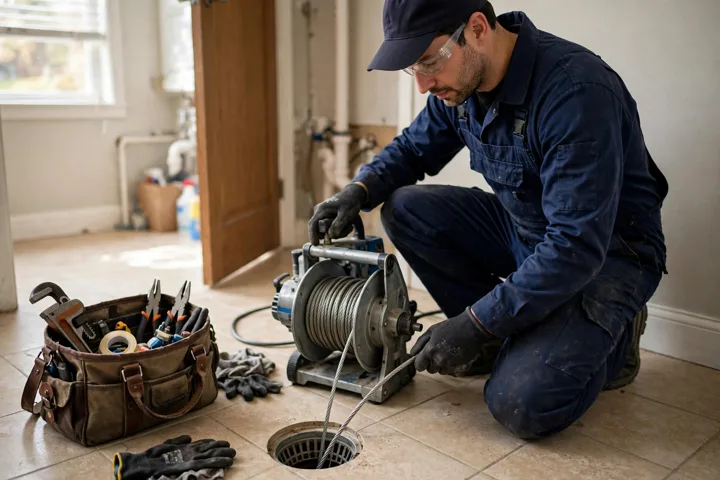
Snaking and clearing for sinks, tubs, toilets, and main lines, with the cause found, not guessed.
Learn more
Emergency Drain Service
Backups and sewage overflows answered fast, with a crew that shows up ready.
Learn more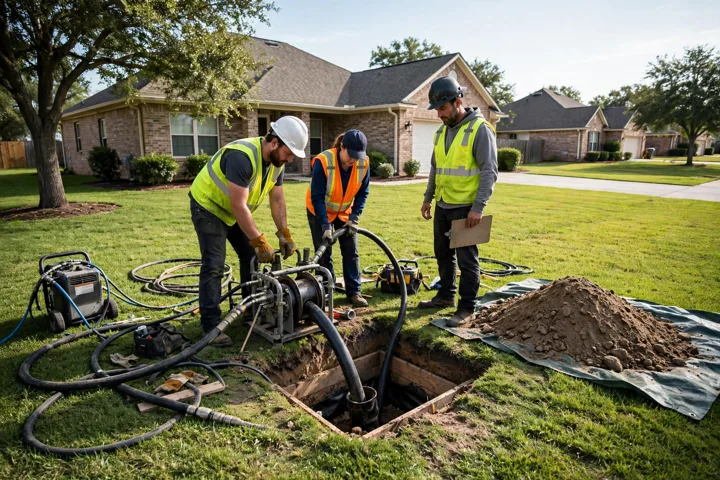
Sewer Line Repair
Spot repairs and section fixes, located by camera first, so we open only what must be opened.
Learn more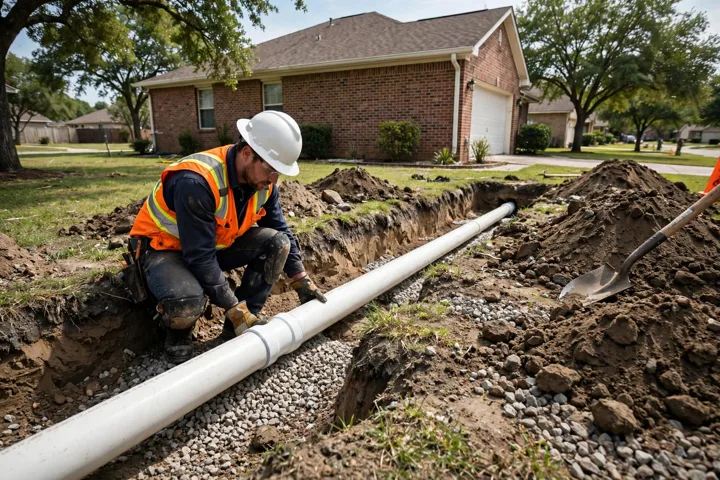
Sewer Line Replacement
Full line replacement in clay and cast iron country, bedded and graded to drain properly.
Learn more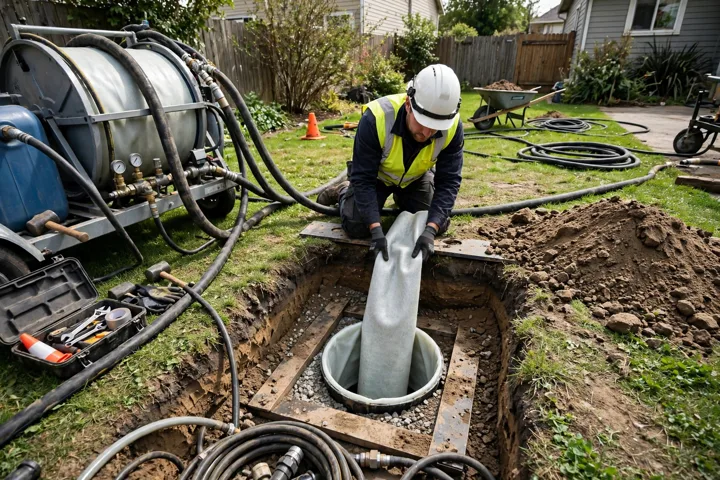
Trenchless Sewer Repair
Pipe lining and bursting that renew the line through small access points, not a torn up yard.
Learn more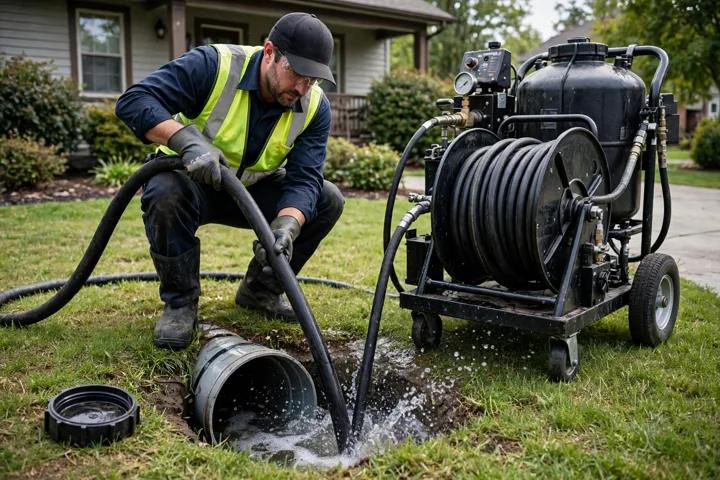
Hydro Jetting
High pressure water scouring that strips grease, scale, and roots back to a clean pipe wall.
Learn more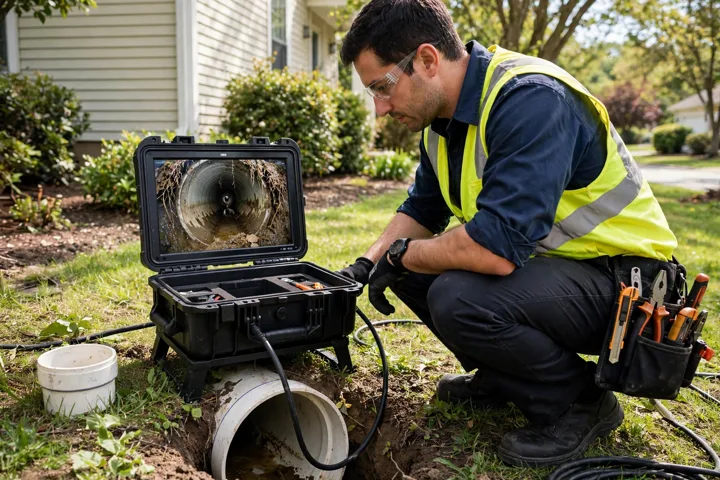
Sewer Camera Inspection
A recorded look inside the line: roots, cracks, bellies, and offsets, shown to you on screen.
Learn moreKeep Reading
Related pages worth opening next, with the ground detail that belongs to each one.
Wylie
Drain and sewer service for Wylie homes, from a crew that serves the Rockwall lake footprint.
Learn moreForney
Drain and sewer service for Forney homes, from a crew that serves the Rockwall lake footprint.
Learn moreDrain and Sewer Cost Guide
What drives the price of drain cleaning, repair, replacement, trenchless, jetting, and camera work, no guesswork.
Learn moreAll Drain and Sewer Services
Seven services, one trade. Nothing else on the truck, nothing else on this site.
Learn moreRequest Service
Tell us what is happening and we will take it from there. We respond fast, and we show you the problem on camera before we quote the fix.