Sewer Repair in Heath, TX
Heath lake homes carry sewer lines through clay soil and mature tree root zones. We locate the failure on camera and repair that section.
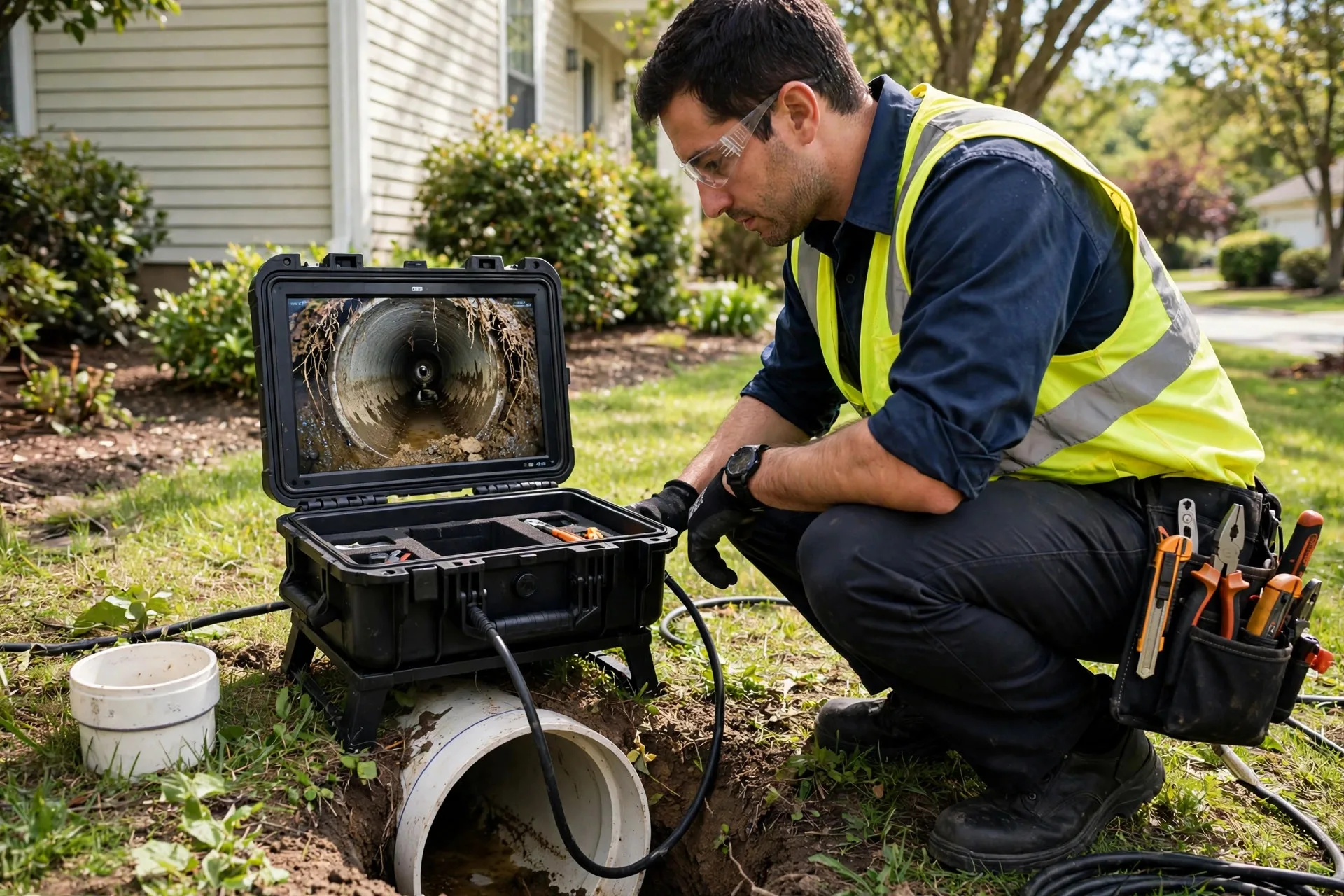
Yes, we provide sewer repair in Heath, TX for lake homes and inland homes across town, where clay soil, mature tree root zones, and longer laterals combine to put more pressure on a sewer line than a shorter run faces. We are a drain and sewer crew only, and we work Heath with the camera ready, because a sewer repair should start from footage of the failed section, not from a guess about where the problem sits. If your line keeps clogging, backs up, or shows a defect on camera, we locate that defect, show you the footage, and repair the section that failed.
Heath lake homes and sewer lines
Heath is a lake town, and lake homes put a particular set of pressures on sewer lines that inland homes do not face in quite the same way. The lots are often larger, the landscaping is often more mature, and the lateral from the house to the street is often longer. A longer lateral means more joints, and every joint is a place where clay movement can open a gap, where roots can enter, and where a low spot can become a belly. A Heath sewer line does not fail because it is near the lake in some mystical sense. It fails because it is longer, older in places, and surrounded by more root pressure than a short run on a tight lot.
Clay soil is the base layer of the Heath story. The soil swells when it gets wet and shrinks when it dries, and it repeats that cycle every year. A sewer line buried in that clay shifts at the joints, sags into bellies where the bedding moves, and opens hairline gaps that were tight when the line was installed. Near the lake, the ground can stay wetter longer than on drier inland streets, which changes the timing of the swell and shrink cycle without changing its effect: the pipe still moves, the joints still open, and the roots still find the gaps. A Heath line that drained cleanly for years can start slowing after a wet stretch followed by a dry stretch, and the homeowner often describes it as a drain that got worse gradually. Gradual worsening is what clay movement looks like from inside the house.

Mature roots and the repair footprint
Mature tree root zones are the second layer, and in Heath they are substantial. Lake homes tend to carry mature oaks and other large trees, planted decades ago and now fully grown, with root systems that have had years to map the ground around the sewer line. A root does not need a broken pipe. It needs a joint gap opened by clay movement, and Heath clay hands it exactly that, season after season. Once a root hair enters the flow, it thickens, catches paper and grease, and grows into a mat that narrows the line. On a long Heath lateral, that mat can form at several joints along the run, which is why a Heath repair conversation often starts with a camera survey of the full length rather than a look at one clog point.
The lake setting also shapes how a repair feels to the homeowner, and we take that seriously. A long lateral under mature landscaping, a driveway, or a carefully kept yard means an open trench along the full run is a bigger disruption in Heath than on a short inland lot. That is part of why camera location matters so much here: a repair targeted at the failed section, or a trenchless renewal where the line qualifies, disturbs far less ground than a full run replacement planned from a guess. The footage decides how much ground needs to open, and that decision is worth getting right before any digging starts.
Sewer repair in Heath
Sewer repair in Heath means fixing the failed section of the line, and the repair starts with a precise location, not a general area. When a Heath line keeps clogging, backs up, or shows a defect on camera, we run the camera through the full lateral and record where each defect sits by distance from the cleanout. A bad joint, a cracked section, a belly holding standing water, or a collapsed length each gets a location, and the repair plan follows those locations section by section. That precision is what keeps a Heath repair from becoming a yard-wide excavation for a problem that sits in one place.
The defects we repair most in Heath follow the town's pressures. Offset joints, where one section has dropped below the next after clay movement, create a step inside the pipe that catches paper and invites roots. Cracked sections, where the pipe wall has split under ground movement or root pressure, let roots in and let water out. Bellies, where the pipe sags and holds standing water, catch debris and refill after every cleaning. Collapsed lengths, where the pipe has lost its shape entirely, block flow outright. Each defect calls for a different repair approach, and the camera footage is what separates them. A belly is not repaired the same way as a crack, and a collapsed length is not repaired the same way as an offset joint.
Beyond the failed section
We also talk plainly about the line beyond the failed section. Repairing one bad joint does not renew the rest of a long Heath lateral, and we say that out loud when the camera shows more wear downstream. If the footage shows a line that will keep failing section by section, we explain the replacement option alongside the spot repair, with the tradeoffs of each, so you can choose with the full picture. A long lateral under mature landscaping deserves that full picture more than a short run does, because the disruption and the stakes of each choice are larger. The goal is a line you can trust for years, not a single repair ticket that buys a few months.
Heath repair calls often arrive after a history of repeat clogs, and that history is useful evidence. A drain that clogs in the same place, in the same season, after the same kind of use, is telling you the line has a fixed defect at a fixed location. Clearing it again without looking inside only resets the countdown to the next clog. The camera breaks that cycle by turning a recurring symptom into a located defect, and a located defect into a repair plan. That is the whole value of a camera-first repair: you pay for work on a defect you have seen, at a location you know, rather than for a guess about a line you cannot see.

Camera-located repair
A sewer camera inspection is the step that makes a Heath sewer repair precise, and we treat it as part of the repair, not as an optional extra. The camera head travels through the cleanout and shows the inside of the pipe on a monitor, live, while we are still at your house. We show you that footage as we go and explain each picture in plain language. Roots look like hair growing through a joint. A belly looks like standing water that never drains away. A crack looks like a dark line across the pipe wall. An offset joint looks like a step where one section dropped below the next. A collapsed length looks like a pipe that has lost its open bore.
Camera location does two practical things for a Heath repair. First, it tells the crew exactly where to dig or where to set up access, by distance from the cleanout, instead of opening ground along a guessed length. On a long lateral under mature landscaping, that difference can mean one access point instead of a trench, or a short trench instead of a long one. Second, it tells you whether the repair you are about to pay for actually matches the defect. If the footage shows one bad joint, a spot repair at that joint is the honest fix. If the footage shows defects along the whole run, a spot repair is a partial answer and you deserve to hear that before you approve it.
The record and the sound sections
Camera work also creates a record of the line that protects you after the repair. If the same lateral slows again in a year, new footage can be compared against the repair footage to see whether the problem is the same defect returning, a new defect forming elsewhere, or a different issue entirely. That record turns sewer work from a series of isolated visits into a history of one line, and a history is how you stop paying for the same guess twice. We recommend a camera survey of the full lateral for any Heath home facing a repair decision, any line that has clogged more than once, and any backup where the cause is not obvious from the fixture pattern alone.
One more point about camera-located repair in Heath: the camera also shows what is sound, and that matters as much as what is broken. A long lateral that looks sound except for one failed section should get a spot repair, not a full replacement, and the footage is the proof that lets you hold that line with a crew. A crew that shows you the sound sections alongside the failed ones is a crew you can trust with the repair, because it is showing you the evidence that limits its own job as well as the evidence that justifies it.
For what moves a Heath repair number, the cost guide walks through the factors.

Replacement versus trenchless summaries
When a Heath line has failed beyond a spot repair, the conversation moves to two fuller options, and each has its own full explanation on this site. In brief, sewer line repair covers the targeted fixes described above, while a full replacement means taking out a failed run and putting in new pipe along that length. Replacement fits a line that has lost its shape, collapsed in places, or failed along much of its length. On a long Heath lateral, replacement is a bigger job with a bigger footprint, and it is not a decision to make from a guess. The camera footage, section by section, is what justifies it: a line failing along its length needs a new run, while a line failing in one place does not.
The trenchless alternative is trenchless sewer repair, which renews or replaces a sewer line through small access points instead of digging along the full length of the run. That can mean lining the inside of a pipe that still holds its shape, giving it a new inner surface, or pulling a new pipe through the path of the old one. Both approaches disturb far less ground than an open trench, which matters on a Heath lot with mature landscaping, a long driveway, or a carefully kept yard. But trenchless work is not right for every line, and the camera is what qualifies it: a pipe that holds its shape can often be renewed trenchlessly, while a pipe that has collapsed, lost its grade, or sagged into a deep belly may not qualify.
Three questions and the mixed plan
For Heath homeowners, the choice between replacement and trenchless often comes down to three questions that the footage answers. First, how much of the line has actually failed: one section, several sections, or the whole run. Second, does the line still hold its shape well enough for a renewal method, or has it lost its shape in ways that only new pipe can fix. Third, how much ground disruption is acceptable for the result, given the length of the lateral and what sits above it. We walk through those three questions from the footage, section by section, rather than presenting one method as the answer for every Heath line. The right method is the one that matches the line you have, not the one that sounds newest or involves the least digging in the abstract.
A mixed plan is also common on long Heath laterals, and we name it plainly when it fits: trenchless renewal where the line qualifies, and a targeted open repair where it does not, such as at a collapsed section or a deep belly. That mixed approach is not a compromise or a shortcut. It is the plan that follows the footage instead of forcing the whole run into one method. We lay it out section by section, with the reason for each method at each location, so you can see why the plan looks the way it does before any ground is opened.
The same three questions decide the plan in Rowlett and Wylie, and the Heath questions we hear most are answered on the FAQs page.

Why are Heath sewer lines more vulnerable than shorter runs?
Because a longer lateral has more joints, and every joint is a place where clay movement can open a gap, roots can enter, and a low spot can become a belly. Heath lots are often larger, with mature trees whose root systems have had years to map the ground, and the ground near the lake can stay wetter longer, which changes the timing of the clay swell and shrink cycle. None of that dooms a Heath line, but it does mean the camera matters more on a long run, because a defect could sit anywhere along it, and locating it by footage beats guessing along the whole length.
How do you locate the exact spot that needs repair on a long Heath lateral?
With the camera, by distance from the cleanout. We run the camera through the full lateral and record where each defect sits: a bad joint, a cracked section, a belly, or a collapsed length, each with its distance. That location turns a repair from a yard-wide guess into a targeted job, which matters on a long lateral under mature landscaping. You see the footage and the location before we ask you to approve any digging, so the repair matches a defect you have seen at a place you know.
Can a Heath sewer line be repaired without digging up the whole yard?
Sometimes, and the camera decides when. If the line still holds its shape, trenchless renewal through small access points may be possible, either by lining the inside or by pulling a new pipe through the old path. If the line has collapsed or lost its grade, an open repair at the failed section may be needed. On long Heath laterals we often recommend a mixed plan: trenchless where the line qualifies, and a targeted open repair where it does not. The footage decides, section by section, and we show it to you before any ground is opened.
Should I repair one bad section or replace the whole Heath line?
That depends on what the rest of the line looks like on camera. If the footage shows a sound line with one failed section, a spot repair is the honest fix, and a full replacement would be more work than the line needs. If the footage shows defects along much of the run, a spot repair is a partial answer, and a replacement or a full trenchless renewal is the conversation worth having. We lay out both options from the footage, with the tradeoffs of each, so you can choose with the full picture rather than from a single repair quote.
Related Services
One trade, seven services. Every service below is drain and sewer only.
Drain Cleaning
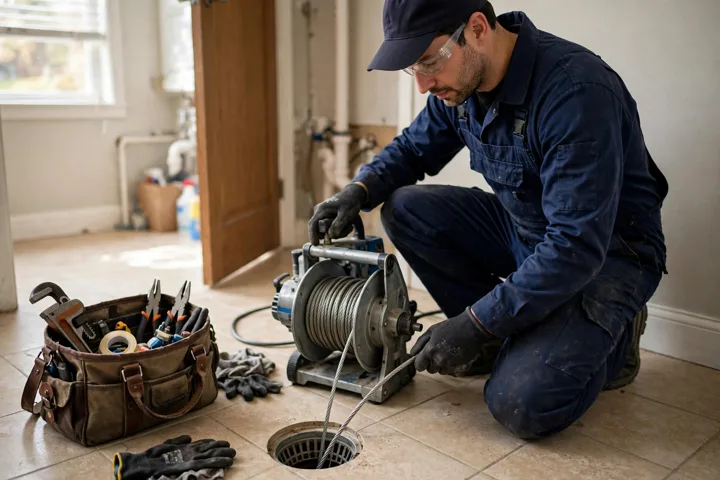
Snaking and clearing for sinks, tubs, toilets, and main lines, with the cause found, not guessed.
Learn more
Emergency Drain Service
Backups and sewage overflows answered fast, with a crew that shows up ready.
Learn more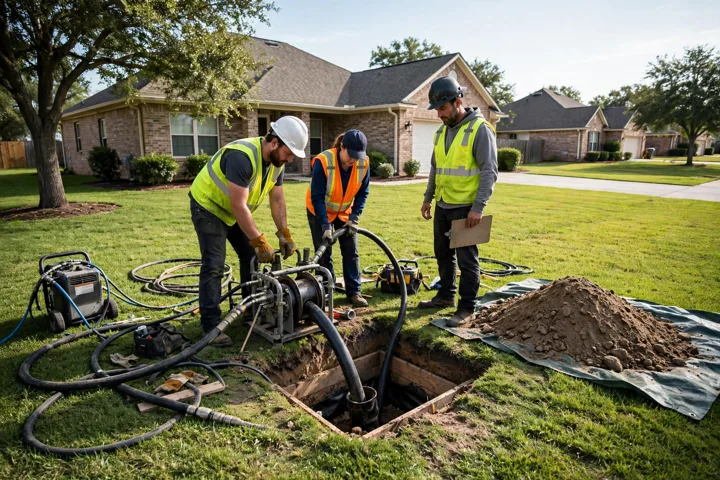
Sewer Line Repair
Spot repairs and section fixes, located by camera first, so we open only what must be opened.
Learn more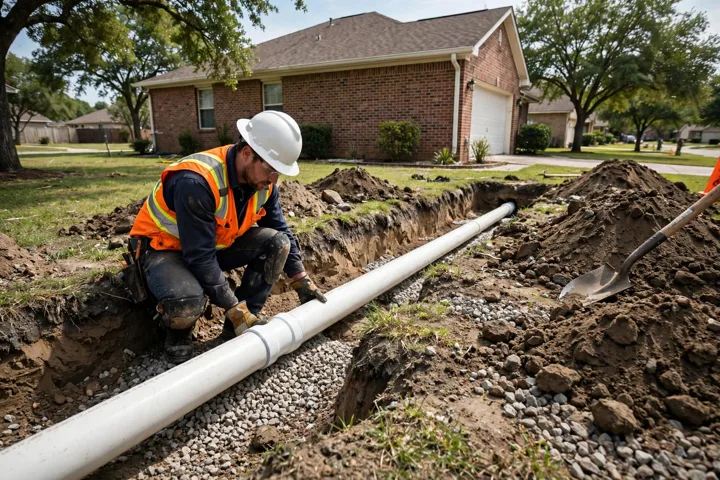
Sewer Line Replacement
Full line replacement in clay and cast iron country, bedded and graded to drain properly.
Learn more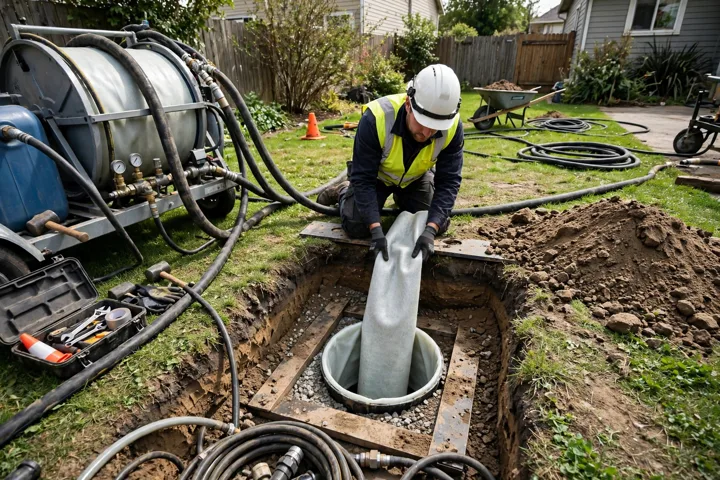
Trenchless Sewer Repair
Pipe lining and bursting that renew the line through small access points, not a torn up yard.
Learn more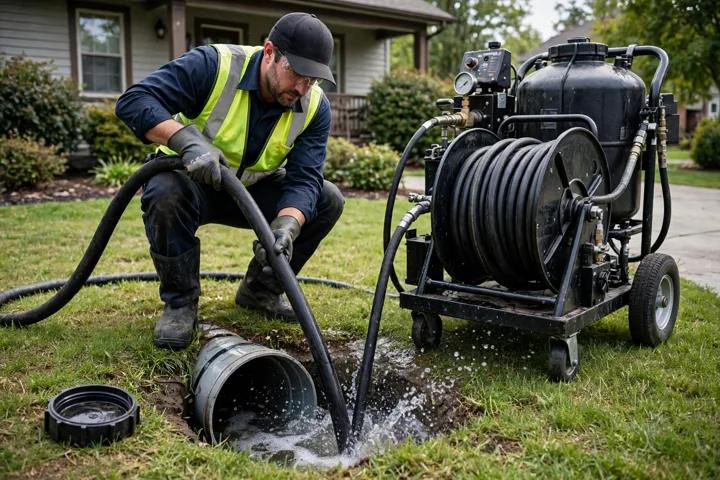
Hydro Jetting
High pressure water scouring that strips grease, scale, and roots back to a clean pipe wall.
Learn more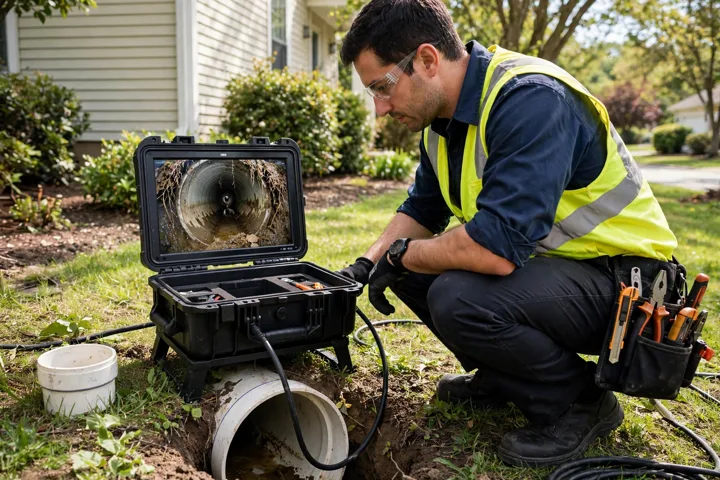
Sewer Camera Inspection
A recorded look inside the line: roots, cracks, bellies, and offsets, shown to you on screen.
Learn moreKeep Reading
Related pages worth opening next, with the ground detail that belongs to each one.
Rowlett
Drain and sewer service for Rowlett homes, from a crew that serves the Rockwall lake footprint.
Learn moreWylie
Drain and sewer service for Wylie homes, from a crew that serves the Rockwall lake footprint.
Learn moreDrain and Sewer Cost Guide
What drives the price of drain cleaning, repair, replacement, trenchless, jetting, and camera work, no guesswork.
Learn moreAll Drain and Sewer Services
Seven services, one trade. Nothing else on the truck, nothing else on this site.
Learn moreRequest Service
Tell us what is happening and we will take it from there. We respond fast, and we show you the problem on camera before we quote the fix.