
Drain Cleaning in Wylie, TX
Wylie growth homes sit on the same shifting ground as Rockwall, with young trees already chasing water. Drain cleaning and jetting keep those lines clear.
Yes, we provide drain cleaning in Wylie, TX for growth-era homes across town, where newer subdivisions sit on ground that still moves and young trees are already chasing water. We are a drain and sewer crew only, and we work Wylie with the camera ready, because a newer home with a slow drain usually has a specific cause inside the line, and finding that cause beats clearing the same clog twice. If one fixture is slow, we clear it and check the rest of the house. If several fixtures slow together, we treat it as a main line problem and look inside before recommending anything bigger.
Wylie growth homes and shifting ground
Wylie grew fast, and fast growth leaves a particular fingerprint on drains. The subdivisions are newer, the streets look settled, and the homes look like they should have decades before a drain problem shows up. Then a kitchen sink starts draining slowly, a guest bath gurgles when the washer runs, or a main line backs up on a busy weekend, and the homeowner wonders how a newer home can already have a sewer problem. The answer is usually the ground, not the age of the house.
The soil around Wylie is expansive clay, and it moves whether the home on top of it is five years old or fifty. It swells when it gets wet and shrinks when it dries, and that cycle works on sewer joints from the first year the line is in the ground. A joint that was tight at construction can open a fraction over a few wet and dry seasons, and that fraction is all a root needs. Young trees make the story faster, not slower. A newly planted tree in a Wylie front yard sends roots out looking for water, and a sewer joint with even a hairline gap is a reliable water source. The roots do not wait until the tree is mature. They find the line while the tree is still young, and they start as fine hairs that thicken into a mat over seasons.

Builder-era laterals and the grease and scale pattern
Builder-era laterals add another layer. A lateral installed during a fast build phase can carry small defects that do not show up on move-in day: a joint that was never quite seated, bedding that settles unevenly after the trench is backfilled, a low spot that becomes a belly once the ground consolidates. None of those defects announce themselves at closing. They show up later as a drain that slows in the same place, a clog that returns after a clearing, or a line that handles normal days fine and backs up when the house uses a lot of water at once. That is why we do not let the age of a Wylie home talk us out of a camera look. Newer pipe in moving ground still needs evidence.
Grease and scale round out the Wylie pattern. Newer subdivisions mean newer kitchens, and newer kitchens still pour grease down the drain, still run dishwashers that push food residue into the line, and still coat the kitchen run over years of daily use. Grease cools as it travels, sticks to the pipe wall, and narrows the run a little at a time. Scale builds the same way in hard water areas, roughening the wall so paper and grease catch more easily. A Wylie drain that slows gradually, without any dramatic event, is often telling you about grease and scale rather than a break, and the fix for that is different from the fix for roots. The camera tells them apart.
Drain cleaning in Wylie
Drain cleaning in Wylie starts with the same sorting we do everywhere: one slow fixture is a local job, several slow fixtures together are a main line job. A single bathroom sink that drains slowly is usually hair and soap scum near the trap, and a kitchen sink that drains slowly and smells is usually grease coating the run. Those clearings are straightforward, and we keep them that way. We use the right size cable for the line, we run water through the fixture afterward, and we check the fixtures downstream to make sure the clearing held across the house.
The main line pattern is where Wylie calls get interesting. When the kitchen, a bathroom, and the laundry all slow together, or when a toilet bubbles while another fixture drains, the blockage sits downstream of all of them. A cable can clear a channel through it and restore flow, which feels like a fix. If the blockage is a root mat at a joint, that channel closes again as the mat grows back. If the blockage is grease, the wall recoats. If the blockage sits in a belly, standing water refills the low spot and catches the next load of paper. In each case the homeowner pays for the same clog again, and the second visit costs the same as the first while teaching nothing new.
Clear, then look inside
Our way out of that cycle is to clear the line so the house can use water again, then run the sewer camera inspection while the line is open and show you the footage on screen. Roots look like fine hairs growing through a joint. Grease looks like a thick, uneven coating narrowing the pipe. A belly looks like standing water that never drains away. An offset joint looks like a step where one section dropped below the next. Each picture points to a different next step, and we explain that step from the footage, not from a script. You decide with the same facts we have.
We also watch how the whole house drains after a Wylie clearing, not just the fixture that called us out. We run every fixture on the affected line and listen as well as watch. A drain that is truly clear drains quietly. Gurgling after a clearing means air is trapped behind a partial blockage the cable passed, and that is a signal to look further, not to pack up. That full-house check takes a few extra minutes and it catches the second blockage that a single-fixture test would miss.

Jetting for roots and grease in newer lines
When a Wylie line is sound in shape but coated or matted inside, a cable is often the wrong tool for the final result. A cable cuts a channel. Jetting scours the wall. That difference is why we recommend hydro jetting for the two Wylie problems that come back most: root mats in newer lines and grease coating in kitchen runs. A jetter sends high pressure water through a nozzle that sprays forward and backward as it travels, cutting roots and washing the wall clean as it goes, and the debris washes out with the flow instead of staying in the line to regrow around a channel.
Jetting is not a cure for a broken pipe, and we say that plainly before we recommend it. If the camera shows a collapsed section, a deep belly, or a joint that has dropped badly out of line, jetting will clean that section and the defect will still be there when the water stops. In that case the honest recommendation is a sewer line repair, and jetting is at most a step that clears the line so the repair can be planned from clean footage.
The jetting visit in a Wylie home usually follows the camera, not the other way around. We want to know the pipe can take the pressure, that there is no collapsed section waiting downstream, and that the line has an open path for debris to wash out. That order protects the pipe and it protects you from paying for a jetting visit on a line that needed a repair all along. After jetting, we run the camera again when the situation calls for it, so you can see the cleaned wall rather than taking our word for it. A before and after pair of pictures is the simplest proof in this trade, and we are glad to show it.

Emergency drain help in Wylie
A backup is a different kind of call from a slow drain, and Wylie homeowners should know what counts as one before water is on the floor. A single slow sink is not an emergency. Several fixtures backing up together is. Sewage coming up through a floor drain, a tub filling when the toilet flushes, or water rising in a shower while the washer drains all mean the main line is blocked and the house itself has become the lowest point in the system. When that happens, stop running water. Every gallon you add pushes against a blockage that has nowhere to go, and the lowest drain in the house will show it first.
Our emergency drain services page covers this pattern in full, and the advice here is the short version of it. Do not run the washer, the dishwasher, or a long shower while a backup is active. Keep people and pets away from standing sewage water. Do not plunge a main line backup aggressively, because plunging pushes against a blockage with no outlet and can force sewage up through another fixture. If you know where your cleanout is, usually a capped pipe near the house wall or in the yard, leave the cap alone unless you know what you are doing, because opening a cleanout under pressure can release sewage into the yard.
What helps the crew most is the order of events. Note which fixtures backed up and in what order, and note what the house was doing when it happened: laundry running, dishwasher running, several showers in a row. That order tells us where the blockage sits before we ever put a cable in the line. Emergency drain help for Wylie means a crew that treats a backup as a main line job from the first minute, clears it, and then looks inside with the camera to find why it backed up, because a backup that is cleared without a cause is a backup waiting for its next busy weekend. We do not promise a clock on this page, because a promise about arrival time is not something a web page can keep honestly. What we promise is the order of work once we are there: stop the backup, clear the line, show you the cause.
The same backup triage covers Rowlett too, and the cost guide walks through what moves a repair number after the water is down.

What we see in Wylie subdivisions
Wylie subdivisions reward a crew that pays attention to the street, not just the fixture. In the newer phases, the calls we see most are grease in the kitchen run, a root mat at a single joint where a young tree found water early, and construction debris or a poorly seated joint left from the build phase that only shows up once the ground settles. Those are all fixable problems, and they are all diagnosable in one visit with a cable and a camera. The mistake is treating any of them as a generic clog, because the fix for grease is different from the fix for roots, and both are different from the fix for a bad joint.
In the slightly older Wylie sections, the pattern shifts toward joints opened by more seasons of clay movement and root systems that have had longer to thicken. The drains there clog in the same place more predictably, and the camera footage shows mats that are denser and joints that are more clearly offset. Those lines sometimes need a repair conversation sooner, and we have that conversation from the footage, section by section, rather than jumping from a clog straight to a replacement quote.
Gurgling: the early warning worth acting on
Across Wylie, the early warning sign worth acting on is gurgling. A toilet that gurgles when the washer drains, or a sink that bubbles when the tub empties, is air trapped behind a partial blockage. It is not an emergency yet, but it is the drain announcing that it will become one. A camera inspection at the gurgling stage is a cleaner, simpler visit than a backup call, and we say so even though the backup call is the bigger job. Calling early is not upselling. It is the difference between a cleaning and a cleanup.
Forney lots bring a different mix on the same clay, covered on the Forney page.
My Wylie home is newer, so why is my drain already slow?
Because the ground moves whether the house is new or not. Expansive clay swells and shrinks with wet and dry seasons, and that movement opens sewer joints a fraction at a time. Young trees send roots toward the water at those joints while they are still small, and builder-era laterals can carry a poorly seated joint or a low spot that only shows up once the ground settles. Age protects a home from some problems, but it does not protect a sewer line from clay, roots, and grease. The camera shows which of those three is behind your slow drain.
What is the difference between snaking and jetting my line?
Snaking cuts a channel through a blockage so water can pass again. Jetting scours the pipe wall clean, cutting roots and washing grease and scale out with the flow. A channel is enough for a simple local clog, but a root mat or a grease coat grows back across a channel, which is why the same drain clogs again a few months later. Jetting is the right tool when the camera shows a sound pipe that is coated or matted inside. It is not a fix for a collapsed or badly bellied pipe, and we say so before recommending it.
What should I do if sewage is backing up in my Wylie home?
Stop running water right away, including the washer and dishwasher, and keep people and pets away from the standing water. Do not plunge a main line backup aggressively, because that can force sewage up through another fixture. Note which fixtures backed up and in what order, since that order tells the crew where the blockage sits. Then call for emergency drain help. Once the line is clear, ask for a camera look at the cause, because a backup cleared without a cause is likely to return.
Will a camera inspection damage my newer sewer line?
No. The camera is a small head on a flexible cable that travels through the cleanout and along the inside of the pipe, and it does not cut, scrape, or pressure the line. It only records what is already there: roots at joints, grease on walls, bellies holding water, or sections that have shifted. For a newer Wylie home, that footage is especially useful, because it separates a simple coating problem from a build-phase defect while both are still straightforward to address.
Related Services
One trade, seven services. Every service below is drain and sewer only.
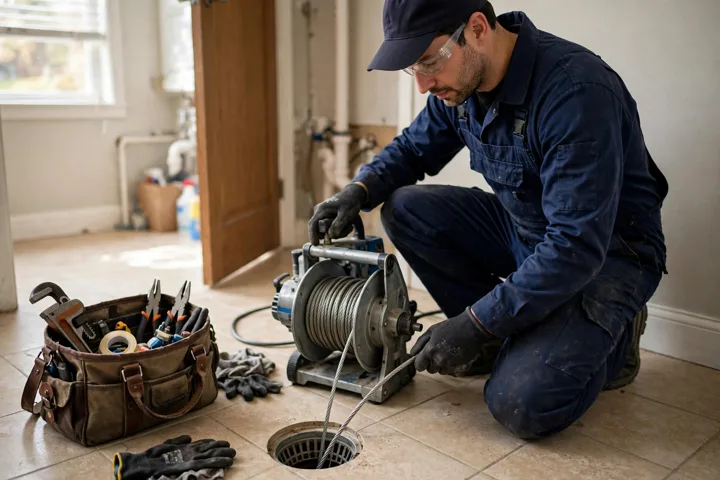
Drain Cleaning
Snaking and clearing for sinks, tubs, toilets, and main lines, with the cause found, not guessed.
Learn more
Emergency Drain Service
Backups and sewage overflows answered fast, with a crew that shows up ready.
Learn more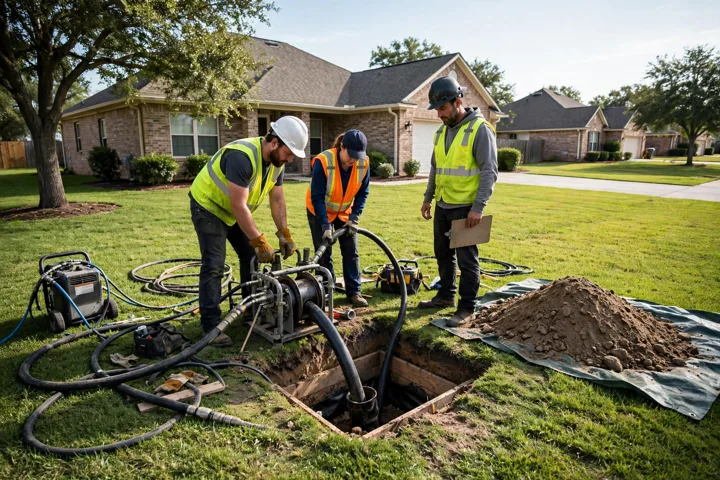
Sewer Line Repair
Spot repairs and section fixes, located by camera first, so we open only what must be opened.
Learn more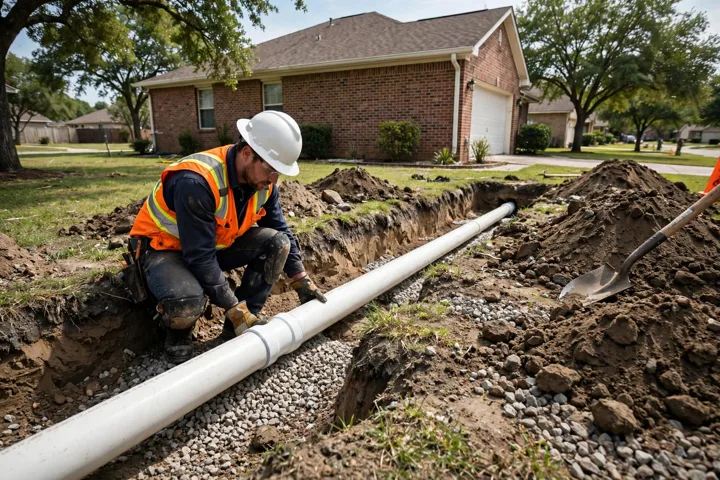
Sewer Line Replacement
Full line replacement in clay and cast iron country, bedded and graded to drain properly.
Learn more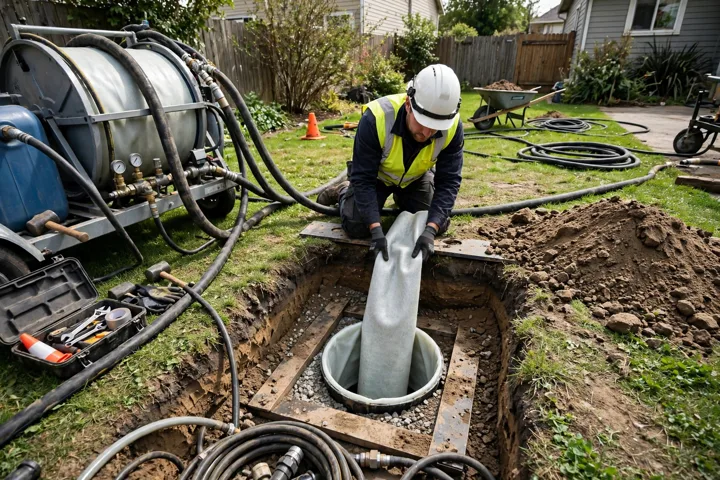
Trenchless Sewer Repair
Pipe lining and bursting that renew the line through small access points, not a torn up yard.
Learn more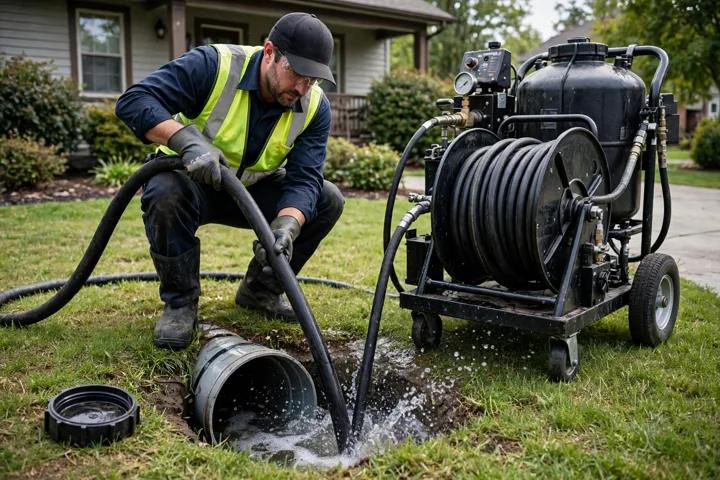
Hydro Jetting
High pressure water scouring that strips grease, scale, and roots back to a clean pipe wall.
Learn more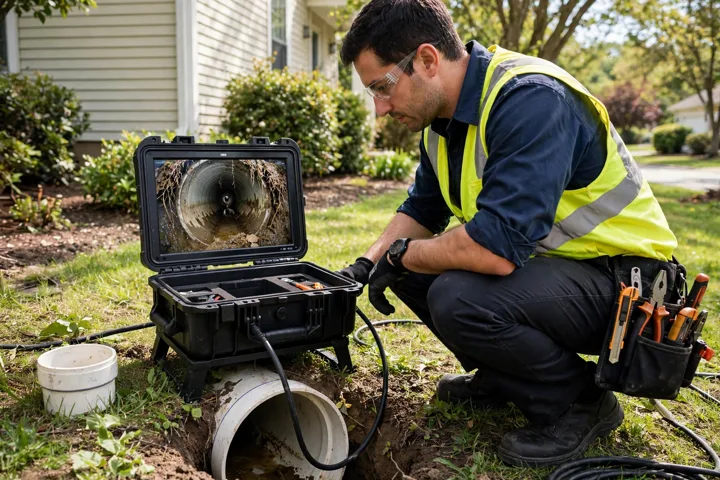
Sewer Camera Inspection
A recorded look inside the line: roots, cracks, bellies, and offsets, shown to you on screen.
Learn moreKeep Reading
Related pages worth opening next, with the ground detail that belongs to each one.
Forney
Drain and sewer service for Forney homes, from a crew that serves the Rockwall lake footprint.
Learn more
Fate
Drain and sewer service for Fate homes, from a crew that serves the Rockwall lake footprint.
Learn moreDrain and Sewer Cost Guide
What drives the price of drain cleaning, repair, replacement, trenchless, jetting, and camera work, no guesswork.
Learn moreAll Drain and Sewer Services
Seven services, one trade. Nothing else on the truck, nothing else on this site.
Learn moreRequest Service
Tell us what is happening and we will take it from there. We respond fast, and we show you the problem on camera before we quote the fix.